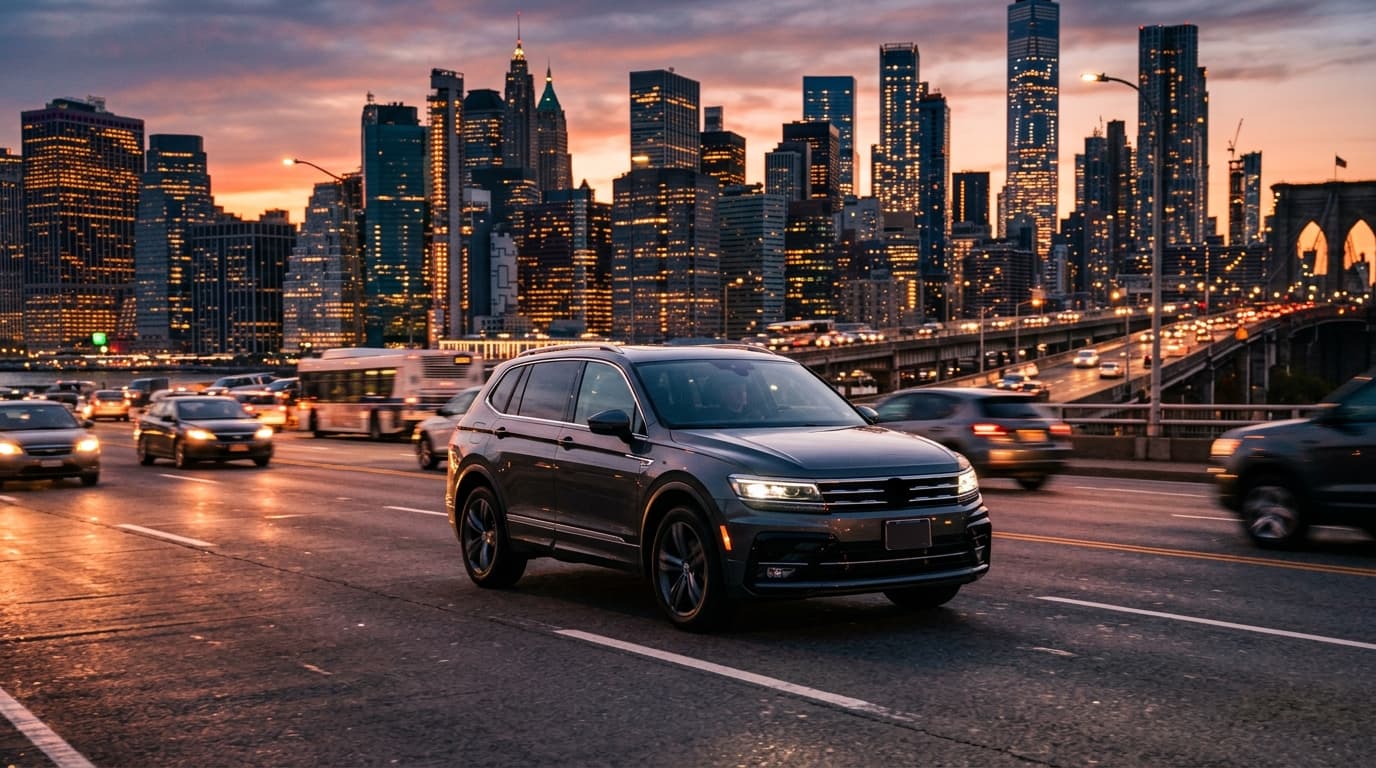
No in Brussels, yes in Flanders. Since 1 January 2026 a Euro 5 diesel no longer enters the Brussels low emission zone, while it drives freely in Antwerp and Ghent. Wallonia, for its part, has no LEZ at all. The sorting happens on a single line of your registration certificate.
Which Euro standard gets you into the Brussels LEZ?
Euro 6 for diesel. Euro 3 for petrol. Below that, the zone is closed to you.
It covers all nineteen municipalities of the Region, 24 hours a day and seven days a week, and 353 cameras read number plates at the entrances, at the exits and inside the perimeter. Since 1 January 2026, Euro 5 diesels and Euro 2 petrols have joined the excluded list, after the Constitutional Court struck down the postponement of that milestone in its ruling of 11 September 2025.
Three details flip the answer for a lot of drivers. LPG, CNG and bioethanol count as petrol, so they face the Euro 3 floor. A hybrid follows the calendar of its fuel: a diesel hybrid remains a diesel and falls with the rest. Electric and hydrogen vehicles get an automatic exemption, with nothing to fill in.
The R0 ring road and the access roads to park and ride facilities stay outside the zone. Driving around Brussels in a banned vehicle, parking at Stalle or Ceria-Coovi and finishing by metro is therefore perfectly legal.
Does my Euro 5 diesel get into Antwerp and Ghent?
Yes. Freely, no pass, no paperwork.
The Flemish government decided not to tighten its low emission zones in 2026, and the City of Ghent says so in black and white: Euro 5 diesels and Euro 2 petrols keep their access. An air quality review is announced for 2027, and that review will decide on any tightening. Access criteria are set at regional level and apply to both Flemish zones, Antwerp and Ghent: only the paid local admissions vary from one city to the other.
Below that line, Flanders grades the response. A Euro 4 diesel gets in on a paid admission, priced by each city according to how much the vehicle pollutes and valid for one year at most. A Euro 3 diesel or older has nothing left but the day pass. Motorbikes and mopeds fall entirely outside the Flemish LEZ, which is not the case in Brussels.
The number that matters: 45 kilometres. That is the distance between the centre of Brussels and the centre of Antwerp, and it is all that separates an illegal vehicle from a fully compliant one. Same SUV, same engine, same plate.
Where does your SUV get in, city by city?
| Your vehicle | Brussels | Antwerp and Ghent | Wallonia |
|---|---|---|---|
| Euro 6 diesel | Free access | Free access | No restriction |
| Euro 5 diesel | Banned: 35 € pass or exemption | Free access | No restriction |
| Euro 4 diesel | Banned: 35 € pass or exemption | Paid admission to apply for | No restriction |
| Euro 3 diesel or older | Banned: 35 € pass or exemption | 45 € pass, 12 times a year | No restriction |
| Petrol, LPG or CNG Euro 3 and above | Free access | Free access | No restriction |
| Petrol, LPG or CNG Euro 2 | Banned: 35 € pass or exemption | Free access | No restriction |
| Electric or hydrogen | Free access, automatic exemption | Outside the scope of the LEZ | No restriction |
One line deserves a comment. A Euro 2 petrol is banned from Brussels and free in Flanders, the exact opposite of what people assume when they picture the capital as more permissive than the north of the country. On diesel as on petrol, the Brussels rule is currently the strictest of the three.
Wallonia buried its regional low emission zone
Nothing to declare, literally. The Walloon decree provided for a Region-wide LEZ from 2023, with a calendar running to 2030. It was abandoned in April 2024, and the majority that emerged from the last elections removed any possibility of introducing one. Municipalities keep the option of creating one on their own initiative. None has done so.
Where do you read your SUV's Euro standard?
On the registration certificate, field V9. It is the only source the administration treats as authoritative.
Four routes lead to the same figure:
- Field V9 of the registration certificate, headed environmental class on Belgian documents.
- The date of first registration, cross-checked against the correspondence tables published by Bruxelles Fiscalité, the Brussels tax administration, when field V9 was left blank.
- The type-approval code, printed on the European certificate of conformity.
- The Car-Pass of a second-hand vehicle, which usually states the standard.
A trap awaits Euro 6 owners: the standard splits into sub-categories, 6b, 6c, 6d-TEMP, 6d and 6e, and Brussels will start sorting between them in 2028, when 6b and 6c are excluded in their turn, before 6d-TEMP follows in 2030. A bare "Euro 6" in a used-car listing therefore tells you nothing about whether the car will last another three years in the capital. Our reference points on the boxes of a Belgian registration certificate set out where to read what.
Field V9 blank or wrong? The correction is requested from the DIV, Belgium's vehicle registration authority, or from Bruxelles Fiscalité for a Brussels file, with the European certificate of conformity as evidence.
How much is a day pass, and how many are you allowed?
35 € in Brussels, 45 € in Flanders. The price gap is trivial, the quota gap is not.
Brussels sells the one-day pass at 35 € for a car or a van, 20 € for a motorbike and 50 € for a lorry, capped at 24 a year per plate. It covers the chosen day until 6 a.m. the next morning, can be bought up to five days after the trip, and is neither exchangeable nor refundable. Antwerp and Ghent sell theirs at 45 €, whatever the vehicle, and cap it at 12 a year.
In practice that produces two very different budgets. The annual maximum works out at 840 € in Brussels against 540 € in Flanders, but the capital opens 24 days to you where Flanders concedes 12. For a Walloon family driving up to Brussels once a month in its Euro 5, the bill stops at 420 € a year. Beyond the quota, no legal route remains, short of an exemption.
What fine do you risk, and from when?
350 € in Brussels, 150 € in Flanders. The two systems do not count the same way.
Brussels caps enforcement at one fine per quarter, so four a year per vehicle, and applies a transitional regime for the vehicles that have just switched sides. First recorded offence: a warning letter, with no financial penalty. Then three months to put things right. Since 1 July 2026 the 350 € fine can land, and it then opens a twelve-month period during which no further fine will be sent. The amount is payable in four instalments, ten on a reasoned request.
That 350 € figure is not arbitrary. The administration writes that it matches the price of the annual pass the government intends to introduce. Ten day passes cost exactly the same, which makes the arrangement look closer to a toll that does not yet exist than to a penalty.
Two amounts go unnoticed. A foreign-registered vehicle that has not registered with the zone pays 150 € in Brussels, even when it fully meets the access criteria. A registration filled in with wrong details costs 25 €. On the Flemish side, the fine starts at 150 € and climbs to 350 € for repeat offences, with only one penalty possible per day, however many times you enter the zone.
An official diversion imposed by the police or by roadworks is not an offence. You do have to have followed the imposed route, though: a camera that spots you elsewhere in the city on the same day is enough to make the fine stick.
Should you sell your Euro 5 diesel now?
Not if you live in Wallonia and Brussels is not part of your daily life.
Two day passes a year cost 70 €. Changing cars to avoid that expense makes no arithmetical sense, and the sums stay in favour of keeping it up to a good dozen trips a year. The reasoning flips for a Brussels resident, for a daily commuter or for a household dropping children at a school inside the Region: there, the vehicle simply becomes unusable.
Three ways out then exist. Reselling, outside the Brussels market, which mechanically shrinks the pool of buyers and therefore the price: our guide to the used car buying and selling channels in Belgium places each of them. Scrapping at an approved centre, which opens the Bruxell'Air premium to Brussels residents, on condition of giving up any new registration for a year. Or replacement, bearing in mind that Brussels has set the end of diesel at 2030 and of petrol at 2035, while Flanders is aiming for zero direct emissions from 2035.
Before buying, add the price and the tax together: our calculation of the registration tax (TMC) and road tax region by region shows that the same SUV sometimes costs 900 € more depending on the registration address. And the comparison tool lets you filter models by powertrain before deciding.
Frequently asked questions
No. Since 1 January 2026, Euro 5 diesels no longer meet the access criteria of the Brussels low emission zone, following the Constitutional Court ruling of 11 September 2025. What remains is the day pass, at 35 €, capped at 24 a year per plate, or an exemption.
Yes, with free access and no paperwork. The Flemish government dropped the tightening that had been planned for 2026, and an air quality review is announced for 2027. A Euro 4 diesel, on the other hand, needs a paid local admission, and a Euro 3 only gets in on a day pass.
None. The regional decree was abandoned in April 2024, and the current majority removed the possibility of introducing one at regional level. Municipalities keep the option of creating one on their own initiative, but none has done so.
In field V9 of the registration certificate, under the environmental class heading. If it is blank, the date of first registration, the type-approval code on the certificate of conformity or the Car-Pass will let you retrieve it. A missing or wrong standard is corrected through the DIV, Belgium's vehicle registration authority, with supporting evidence.
35 € in Brussels for a car or a van, 20 € for a motorbike and 50 € for a lorry, with a maximum of 24 passes a year per plate. In Antwerp and Ghent the pass costs 45 € whatever the vehicle, and the quota drops to 12 a year. In both cases it runs until 6 a.m. the next morning.
350 €, with a maximum of four fines a year per vehicle. A foreign-registered vehicle that has not been registered with the zone pays 150 €, even when it meets the access criteria. In Flanders the fine starts at 150 € and can climb to 350 € for repeat offences, with only one penalty possible per day.
Yes, according to its fuel. A petrol hybrid follows the petrol calendar and a diesel hybrid follows the diesel calendar: a Euro 5 diesel plug-in hybrid is therefore banned from Brussels exactly like a conventional diesel. Only electric and hydrogen vehicles get an automatic exemption.
No. The R0 ring road and certain roads leading to park and ride facilities sit outside the perimeter. You can therefore drive around the Region in a non-compliant vehicle, leave the car at Stalle, Ceria-Coovi, Lennik, UZ or Kraainem, and carry on by public transport.
We dig through the Belgian market data — TÜV reliability, real-world ADAC consumption, company-car taxation, list prices — to call it straight. No brand pays us.