
In Belgium, the sales channel matters more than the sticker price. Buy from a professional and you get twelve months of legal warranty minimum. Buy from a private seller and you get none. And if the whole purchase happens at a distance, you gain fourteen days to change your mind. Here is what each channel gives you, and what it costs.
Dealership, discounter, marketplace or private seller: which one?
A professional if you want a warranty, a private seller if you want the low price and you know how to read a car. Two thirds of the Belgian market is used: 734,165 vehicles changed plates in 2025, or 63.9% of total registrations.
That volume comes from a single source, the registration statistics published by Traxio, the Belgian automotive sector federation. It also states that 90% of those used-car registrations were made by private individuals. The Belgian used market is therefore overwhelmingly a private market, which is exactly why private-to-private ads set the price reference.
| Channel | Belgian examples | Legal warranty | 14-day withdrawal | Relative price |
|---|---|---|---|---|
| Dealership / labelled network | Spoticar, Touring Carselect | 12 months minimum | No (showroom purchase) | Highest |
| Multi-brand discounter | Cardoen, MyWay | 12 months minimum | No (showroom purchase) | Mid-range |
| Fully online retailer | Autohero | 12 months minimum | Yes if everything is remote | Mid-range |
| Private classified ad | AutoScout24, 2ememain, Moniteur Automobile used cars | None | No | Lowest |
Watch out for a common confusion: AutoScout24 and the Moniteur Automobile used-car pages are not sellers. They are shop windows hosting professional garages and private individuals alike. Your rights do not depend on the website where you found the ad, but on the status of the person who signs the order form. On the Belgian market, that is the first thing to check, before you even discuss price.
What does the channel really change about the warranty?
Everything. A used car bought from a professional seller carries a legal warranty of at least one year from delivery. Between private individuals there is no legal warranty at all: your only route is a hidden-defect claim.
The legal detail matters. On a new car the legal warranty is two years; on a used car the professional seller may shorten it, but never below twelve months. Some networks go further commercially: Spoticar advertises inspected used cars guaranteed for twelve months minimum, with an extension up to twenty-four months, and Touring Carselect covers at least the engine and gearbox for twelve months.
The hidden-defect route is far narrower than most buyers assume. You must prove three things: the fault existed before the sale, it could not be detected during a normal inspection, and it makes the vehicle unfit for use. An automatic gearbox that fails 4,000 km after a private purchase rarely ends in a free repair. It ends in a court-appointed expert report, legal fees, and usually abandonment.
What if the professional seller refuses the warranty?
An order-form clause excluding the legal warranty on a professional-to-consumer sale has no effect. The seller may bring the term down to twelve months; he cannot remove it. If a garage hands you a contract marked "sold as seen, no warranty", that is not a negotiation, it is an unfair term, and TRAXIO itself reminds its members of the rule.
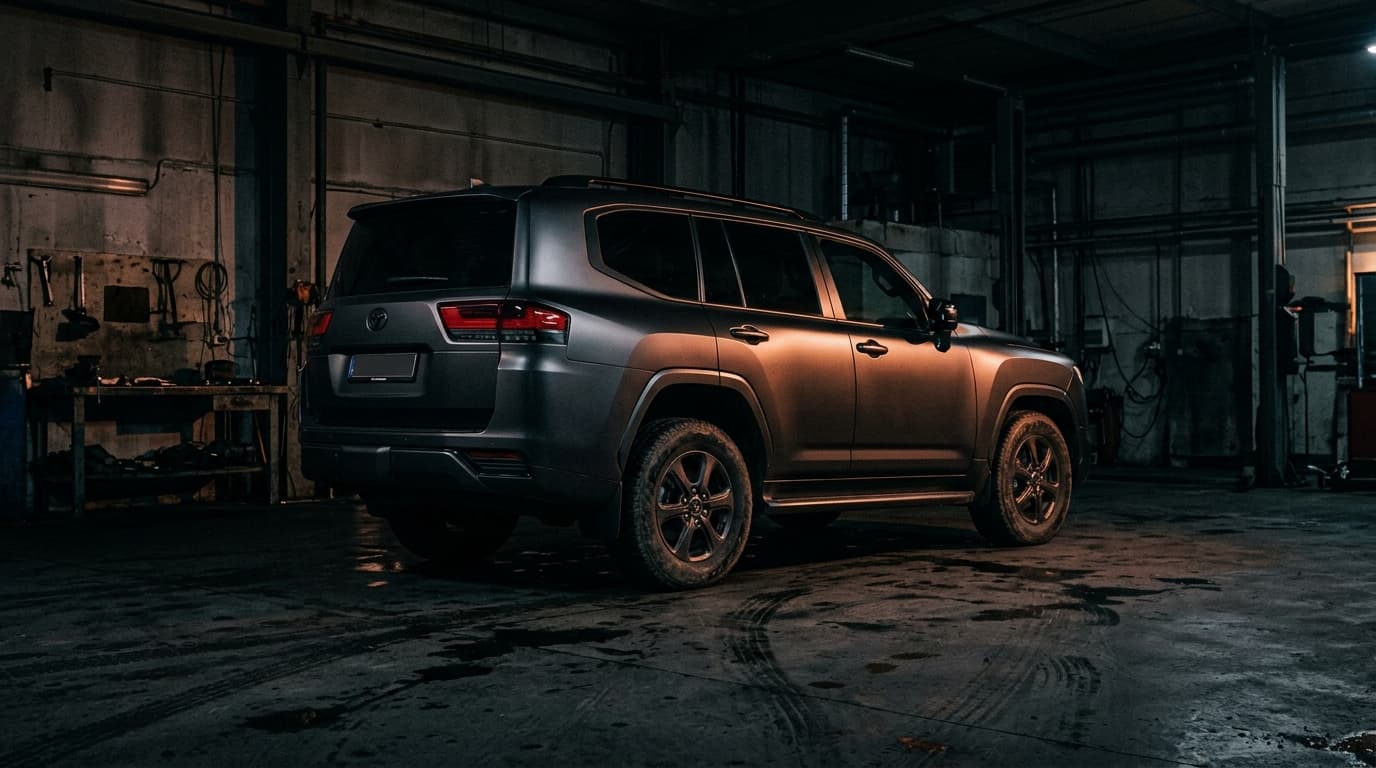
Why is the Car-Pass not enough on an imported SUV?
Because the Car-Pass only knows the vehicle's Belgian life. A SUV imported from Germany or the Netherlands arrives with an odometer history that was never recorded in the Belgian database. The irregularity rate there is four times higher: 0.50% against 0.12% on Belgian-origin vehicles.
Those figures come from the Car-Pass 2025 annual report. That same year the non-profit processed close to 23 million odometer readings from 14,597 sources, including 5.16 million from connected vehicles across more than 40 brands. It detected 1,466 frauds, averaging 80,000 km wiped. The 2025 record is a Mercedes E200 CDI showing 192,030 km when it had actually covered 562,690, meaning 370,660 km removed.
The Car-Pass data shows the problem is not frequency but scale. One case in a thousand is low; 80,000 km on average on a ten-year-old car is a third of its life gone, and several thousand euros of artificial value. On an imported SUV, ask for the service book stamped abroad and the original invoices on top of the Car-Pass. Without those, you are buying a declared mileage. We covered the resale consequences in our analysis of which SUVs hold their value best in Belgium.
Buying online: do you have 14 days to change your mind?
Yes, under one strict condition: every step of the purchase must have taken place at a distance. The right of withdrawal described by SPF Économie then gives you 14 calendar days to cancel, with no reason and no cost.
That is the real difference between a fully online retailer such as Autohero, which sells, contracts and delivers remotely, and a classic discounter where you sign the order form at the counter. In the second case there is no withdrawal right: Belgian law provides no cooling-off period for a purchase concluded in the seller's presence, showroom included.
What we would avoid: reserving a SUV online, then driving over to finalise the order on site while assuming the 14 days still apply. A single in-person step is enough to cancel the right. If that safety net matters to you, insist the order form be signed electronically and the car delivered to your home.
How to buy a used SUV, step by step
Six steps, in this order. Most bad deals come from inverting them: negotiating the price before seeing the documents.
- Pick the channel before the model. Warranty needed, budget, risk tolerance. A 120,000 km plug-in hybrid SUV from a private seller is not the same bet as a 60,000 km petrol from a professional.
- Filter on origin. Belgian since first registration, or imported. The mileage risk gap is documented and quantified.
- Ask for the Car-Pass before you travel. A seller who postpones that request is saving you time: move on.
- Check the five documents during the test drive, not afterwards (see the next section).
- Test the car cold, engine not pre-warmed, over at least 20 km mixing town and dual carriageway. Dual-clutch gearbox faults and hybrid drivetrain jolts show up in the first five minutes.
- Sign, then register through the DIV (the Belgian vehicle registration office), usually handled by the professional seller, or by your insurance broker on a private purchase.
Step 5 is the one everyone skips when the seller has started the car before you arrive. On the Belgian market that is common practice and perfectly legitimate on the seller's side; it is up to you to insist on a cold engine. The official purchase procedure and mandatory documents are summarised on the Belgian federal portal belgium.be (page in French).
Which documents should you demand before signing?
Five, and none is optional. A Car-Pass less than two months old, the roadworthiness certificate issued for sale, the registration certificate, the certificate of conformity, and the service book with invoices.
The Car-Pass is imposed by the Belgian law of 11 June 2004 for any vehicle under ten years old, including between private individuals, and the seller pays for it. The roadworthiness test issued for sale is a full inspection, distinct from the periodic test, also at the seller's expense, and its certificate is only valid for two months. If either is missing, the sale does not comply and can be annulled.
The number that matters: two months. That is the shared validity period of the Car-Pass and the pre-sale roadworthiness certificate. A four-month-old file is not an administrative detail, it is an expired file, and often the sign of a car that has been sitting. For the mechanical criteria, our selection of the most reliable used SUVs in Belgium lists the models worth buying, and our reliability ranking by brand the makes to avoid beyond six years.
Which mistakes cost the most, channel by channel?
One per channel, and they repeat. With a private seller: believing a verbal agreement replaces a warranty. With a professional: paying for a commercial extension without reading what it excludes. Online: losing your withdrawal right by driving over.
On a classified ad, "trust me, it's spotless" has no legal weight. Write the declared condition, mileage and absence of accident damage on the sales agreement: without a written record you have nothing to rely on. What we would also avoid: buying a SUV privately without reading the service book, when 90% of the Belgian used market runs through that very channel and the next buyer will ask you for that same book.
With a professional, the mistake is financial. A commercial warranty extension at €800 or €1,200 that excludes the gearbox, the injectors and the traction battery does not protect you against what actually breaks on a modern SUV. Read the exclusion list before signing, not the brochure. On a used electric SUV the central question is different again: battery state of health and whether its warranty transfers, which we handled separately in our guide to used electric SUVs.
In practice, the rule is simple. Under €12,000, on simple and well-documented mechanics, the private seller still makes sense. Above that, or on a plug-in hybrid, a dual-clutch gearbox and more than 100,000 km, the twelve months of legal warranty from a professional are worth the premium.
Frequently asked questions
Where should you buy a used SUV in Belgium if you want to be covered? From a professional seller, whichever kind: brand dealership, labelled network, multi-brand discounter or online retailer. Belgian law imposes a legal warranty of at least one year on a used car sold by a professional to a consumer, counted from delivery. Between private individuals that warranty does not exist: all you have left is a hidden-defect claim, which requires proving the fault existed before the sale and could not be detected.
What is the difference between a dealership, a discounter and a marketplace? A dealership sells the brands it represents, with the service history in its own system. A multi-brand discounter such as Cardoen or MyWay buys in volume and sells cheaper, often imported vehicles. A marketplace like AutoScout24, 2ememain or the Moniteur Automobile used-car pages is only a shop window: your actual seller is the garage or the private individual behind the ad, and that is what determines your rights.
Do you get 14 days to return a car bought online in Belgium? Only if the purchase took place entirely at a distance, with no step in the seller's presence. That is the distance-selling rule set by SPF Économie (the Belgian federal economy department): 14 calendar days, no reason and no cost. A fully online retailer such as Autohero falls within that framework. If you book online and then sign the order form in a showroom, the right of withdrawal disappears.
Is a Car-Pass mandatory for a private seller? Yes. The Belgian law of 11 June 2004 requires a recent Car-Pass to be handed to the buyer for any sale of a vehicle under ten years old, including between private individuals. A sale without a Car-Pass can be annulled. The document is issued by the Car-Pass non-profit and the seller pays for it: it should cost you nothing.
Is a SUV imported from Germany riskier? Statistically yes, on mileage. The Car-Pass 2025 annual report reports an irregularity rate of 0.50% on imported vehicles against 0.12% on Belgian-origin ones, a factor of four. The reason is structural: the odometer history before the car entered Belgium is not in the database, so the Car-Pass only covers the vehicle's Belgian life.
Which documents should you demand before signing? Five: a Car-Pass less than two months old, the roadworthiness certificate issued for sale (also valid two months), the registration certificate, the certificate of conformity, and the service book with invoices. If the Car-Pass or the pre-sale roadworthiness test is missing, the transaction does not comply with Belgian law and you can have it annulled.
Is it worth paying more to buy from a professional? On a SUV between €15,000 and €30,000, the gap between a private ad and a labelled network is usually €1,000 to €2,500. In exchange you get twelve months of legal warranty and, with some networks, a commercial extension up to 24 months. Replacing one automatic gearbox costs more than that. For a SUV over 100,000 km or with complex mechanics (plug-in hybrid, dual-clutch), the professional is the rational bet.
Frequently asked questions
From a professional seller, whichever kind: brand dealership, labelled network, multi-brand discounter or online retailer. Belgian law imposes a legal warranty of at least one year on a used car sold by a professional to a consumer, counted from delivery. Between private individuals that warranty does not exist: all you have left is a hidden-defect claim, which requires proving the fault existed before the sale and could not be detected.
A dealership sells the brands it represents, with the service history in its own system. A multi-brand discounter such as Cardoen or MyWay buys in volume and sells cheaper, often imported vehicles. A marketplace like AutoScout24, 2ememain or the Moniteur Automobile used-car pages is only a shop window: your actual seller is the garage or the private individual behind the ad, and that is what determines your rights.
Only if the purchase took place entirely at a distance, with no step in the seller's presence. That is the distance-selling rule set by SPF Économie (the Belgian federal economy department): 14 calendar days, no reason and no cost. A fully online retailer such as Autohero falls within that framework. If you book online and then sign the order form in a showroom, the right of withdrawal disappears.
Yes. The Belgian law of 11 June 2004 requires a recent Car-Pass to be handed to the buyer for any sale of a vehicle under ten years old, including between private individuals. A sale without a Car-Pass can be annulled. The document is issued by the Car-Pass non-profit and the seller pays for it: it should cost you nothing.
Statistically yes, on mileage. The Car-Pass 2025 annual report reports an irregularity rate of 0.50% on imported vehicles against 0.12% on Belgian-origin ones, a factor of four. The reason is structural: the odometer history before the car entered Belgium is not in the database, so the Car-Pass only covers the vehicle's Belgian life.
Five: a Car-Pass less than two months old, the roadworthiness certificate issued for sale (also valid two months), the registration certificate, the certificate of conformity, and the service book with invoices. If the Car-Pass or the pre-sale roadworthiness test is missing, the transaction does not comply with Belgian law and you can have it annulled.
On a SUV between €15,000 and €30,000, the gap between a private ad and a labelled network is usually €1,000 to €2,500. In exchange you get twelve months of legal warranty and, with some networks, a commercial extension up to 24 months. Replacing one automatic gearbox costs more than that. For a SUV over 100,000 km or with complex mechanics (plug-in hybrid, dual-clutch), the professional is the rational bet.
We dig through the Belgian market data — TÜV reliability, real-world ADAC consumption, company-car taxation, list prices — to call it straight. No brand pays us.