
Two taxes, never the same rules. The registration tax is paid once, the road tax every year, and the amount changes depending on whether your SUV is registered in Namur, Brussels or Ghent. On a high-power electric car, the gap reaches 1,836 €.
One tax on registration, another every year
The TMC (taxe de mise en circulation, BIV in Dutch) hits the vehicle as it enters the regional fleet. New or used, imported or bought from a dealer, you pay it once, at registration.
The taxe de circulation, the annual road tax, comes back every year for as long as the plate lives. It is calculated on engine displacement converted into fiscal horsepower in Brussels and Wallonia, and on a greened formula in Flanders.
Neither depends on the garage where you sign. Only the address of the holder on the registration certificate counts.
Three regions, three calculation bases
Since 1 July 2025, the three systems have nothing left in common. Wallonia switched to a formula that weighs the car. Brussels stayed on the old power-based scales. Flanders calculates on CO2, raised to the sixth power.
| Criterion | Wallonia | Brussels | Flanders |
|---|---|---|---|
| Registration tax base | kW, CO2, mass, fuel, age | the higher of the fiscal-horsepower and kW scales, then age | WLTP CO2, fuel, Euro standard, age |
| Mass counts | yes, divided by 1,838 kg | no | no |
| CO2 counts | yes, divided by 136 under WLTP | no | yes, the dominant term |
| New electric car | 50 € to nearly 1,900 € depending on power | 78.88 € | 61.50 € |
| Hybrid | 0.8 coefficient | no advantage | indirectly, through CO2 |
| Floor and ceiling | 50 € and 9,000 € | 78.88 € and 6,357.85 € | 61.50 € and around 14,000 € |
Rates in force from 1 July 2026 to 30 June 2027, compiled by Le Moniteur Automobile and published by SPW Finances.
The mass line is the one that tipped the Walloon SUV market. We covered the mechanism and its 1,838 kg pivot in our piece on how Belgian administration actually defines an SUV.
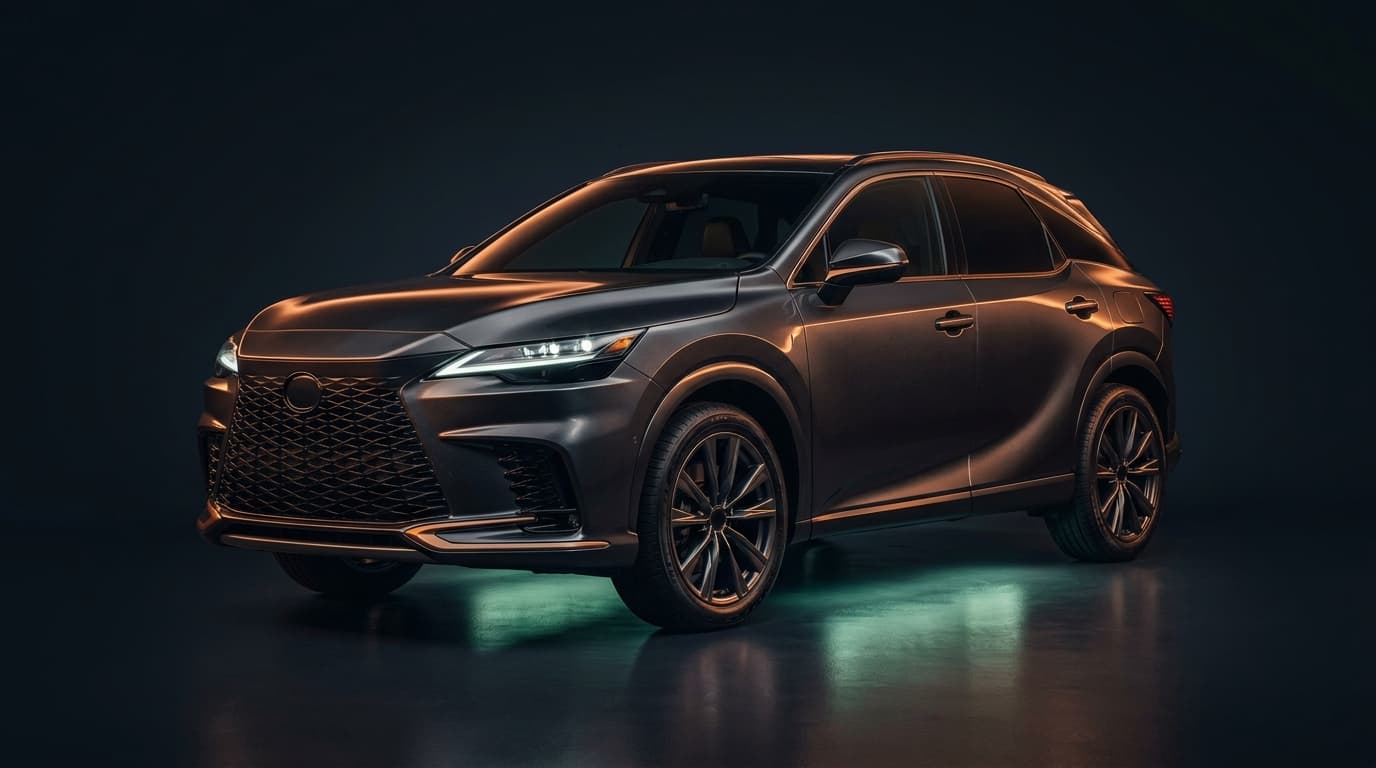
How much for a 130 kW petrol SUV?
Take a profile that is common on the Belgian market: a petrol family SUV rated 130 kW, 165 g of CO2 under WLTP and a 2,400 kg maximum authorised mass. New, registered today.
In Wallonia, the base amount for the 121 to 155 kW bracket is 2,579.10 € for the 2026-2027 year. Multiply it by 165 divided by 136, then by 2,400 divided by 1,838, then by a fuel coefficient of 1. Result: 4,085.82 €.
In Brussels, no calculation at all. The kW grid puts 130 kW in the 121 to 155 bracket, so 3,178.28 € for a private buyer taking a new car. The fiscal-horsepower grid gives less, so the higher of the two applies.
Nine hundred and seven euros apart, for the same car, forty kilometres away.
The same profile as a hybrid changes the Walloon side: the fuel coefficient drops to 0.8 and the bill falls to 3,268.65 €. Brussels rewards hybridisation with nothing at all and stays at 3,178.28 €. A Brussels household therefore has no fiscal reason to pay the premium for a hybrid driveline, while a Walloon household saves 817 € on registration alone.
On a smaller footprint the gap almost vanishes. A compact SUV rated 110 kW, 148 g and 2,100 kg gives 1,121.97 € in Wallonia against 1,112.01 € in Brussels. Ten euros. The Walloon formula only really bites above 1,838 kg and above 136 g.
Is an electric SUV really taxed less?
In Flanders and Brussels, yes, massively. In Wallonia it comes down to a single figure: the power in box P.2.
The Walloon decree sets four fuel coefficients for electric and hydrogen vehicles. Up to 120 kW, it is 0.01. From 121 to 155 kW, 0.10. From 156 to 249 kW, 0.18. From 250 kW upwards, 0.26. The ratio between the first and the last is twenty-six.
Three cases, calculated on the rates in force.
An electric SUV rated 120 kW with a 2,000 kg maximum authorised mass produces a raw result of 14.03 €. The legal floor lifts it to 50 €, and Wallonia then becomes the cheapest of the three regions, below the 61.50 € of Flanders and the 78.88 € of Brussels.
Move up to 150 kW and 2,200 kg: 308.71 €. Wallonia is already four times dearer than Brussels.
Go to 250 kW and 2,600 kg, the footprint of a large electric family SUV: 1,897.53 €. Twenty-four times the Brussels bill. Thirty-eight times what the same buyer would pay in Wallonia on a 120 kW version.
The expensive detail plays out over a single kilowatt. A motor homologated at 249 kW stays on the 0.18 coefficient. At 250 kW it jumps to 0.26, and the bill climbs 44 % without a single other characteristic of the vehicle changing. On dual-motor variants, the difference between two trims of the same model can therefore run into hundreds of euros of registration tax.
Worth avoiding: ordering the most powerful version of an electric SUV in Wallonia without first running the three certificate boxes through the SPW Finances simulator. The assessment lands months after delivery, and it cannot be challenged on the strength of a dealer quote.
Since 1 January, Flanders taxes electric cars too
The change is recent and it went largely unnoticed in the south of the country.
Until 2025, a fully electric or hydrogen vehicle registered in Flanders was exempt from both BIV and annual road tax. For any registration from 1 January 2026, the exemption disappears: 61.50 € of flat, non-indexed BIV, plus the minimum annual road tax of 107.18 € for the period running from 1 July 2026 to 30 June 2027.
Electric cars registered before 1 January 2026 keep their exemption. But they keep it only for as long as they stay in the same name.
In other words, a 2024 Flemish electric car sold on to a private buyer drops its new owner into the taxed regime. The seller loses nothing, the buyer inherits an annual charge that never appeared in the listing. That point deserves a direct question to the seller before negotiating a used electric SUV.
Does buying used bring the bill down?
Yes, sharply, but each region applies its own scale.
Wallonia slides the base amount down: 100 % when new, 60 % at four years, 30 % at ten years, then a base-amount floor of 61.50 € beyond fifteen, with the final tax never dropping below 50 €. Brussels applies a comparable percentage to the starting amount, with a 78.88 € floor. Flanders runs an age factor that falls to 0.00 after fifteen years, which is why an older car costs almost nothing to register there.
So what does that give on our 110 kW compact petrol SUV? New, 1,121.97 € in Wallonia. At four years, 673.18 €. At ten years, 336.59 €.
Degressivity applies only to the base amount. The CO2 and mass terms never move: a heavy, polluting used car stays heavy and polluting in the eyes of the Walloon decree.
How much every year, once the car is registered?
Brussels and Wallonia apply exactly the same table, municipal surcharges included, from 1 July 2026 to 30 June 2027.
| Fiscal horsepower | Displacement | Wallonia and Brussels | Flanders, Euro 6 petrol |
|---|---|---|---|
| 7 CV | 1,151 to 1,350 cc | 253.31 € | around 215 € |
| 9 CV | 1,551 to 1,750 cc | 373.16 € | around 316 € |
| 11 CV | 1,951 to 2,150 cc | 561.00 € | around 475 € |
| Electric | not applicable | 107.18 € | 107.18 € |
The Flemish column is an order of magnitude computed at 148 g of CO2, not a published scale: Flanders starts from a base amount per fiscal horsepower, corrects it by 0.30 % per gram of CO2 above or below a 149 g WLTP reference, applies a 15 % bonus to Euro 6 petrol and a 15 % penalty to Euro 6 diesel, then adds 10 % of municipal surcharges. On a Euro 5 diesel, the penalty rises to 25 %. The official Vlaamse Belastingdienst simulator gives the exact amount.
A 2.0 diesel SUV rated 11 CV therefore costs 561.00 € a year in Namur as in Uccle, and roughly 100 € less in Leuven. Over eight years of ownership the gap approaches 800 €. It does not justify moving house, it does deserve a line in a total-cost calculation.
Leased cars sit outside this regional logic: to avoid competition between regions, they remain subject to the old, non-indexed federal scales, identical everywhere in the country.
Three profiles, three verdicts
A Brussels household after a large combustion SUV pays less than a Walloon one, because the capital ignores mass. A Walloon household after a compact electric car pays 50 €, the lowest rate in the country. A Flemish household ordering an electric car in 2026 loses an advantage that its neighbour kept for life on a car bought in December 2025.
Four mistakes come up again and again:
- Confusing commercial power in horsepower with the homologated power in kilowatts in box P.2, the only figure the three scales read.
- Taking the weighted combined CO2 value of a plug-in hybrid instead of the plain combined value, the only one SPW Finances accepts.
- Assuming a hybrid is cheaper to register everywhere: in Brussels it is not worth a single euro of reduction.
- Forgetting that the annual tax follows the holder's address, and that moving house changes which region issues the next payment invitation.
Before signing, read P.2, V.7 and F.1 off the vehicle sheet and run them through your region's simulator, SPW Finances, MyTax for Brussels Fiscality or the Vlaamse Belastingdienst. To compare two models on their real mass and power before you even open a simulator, use our comparison tool. And if the car runs as a company vehicle, deductibility plays out elsewhere, in our guide to company car SUV taxation.
Frequently asked questions
What is the difference between the TMC and the annual road tax in Belgium? The TMC (taxe de mise en circulation, or BIV in Dutch) is due once, when the vehicle is registered in your name, new or used. The taxe de circulation comes back every year for as long as the plate stays active. Paying one never exempts you from the other, and both belong to the region where you are domiciled, not to the dealership where you signed.
Which Belgian region taxes an SUV the least? It depends on the powertrain. For a heavy petrol or diesel SUV, Brussels is the cheapest of the three: our calculation on a 130 kW, 165 g CO2, 2,400 kg profile gives 3,178.28 € in Brussels against 4,085.82 € in Wallonia. For a high-power electric car the ratio flips hard, and Flanders comes out in front at 61.50 €.
Does an electric SUV pay registration tax in Belgium? Yes, in all three regions since 2026. Brussels charges its 78.88 € minimum, Flanders a flat 61.50 € for registrations from 1 January 2026, and Wallonia a full calculation where the fuel coefficient climbs from 0.01 below 120 kW to 0.26 above 250 kW. A large Walloon electric SUV can therefore exceed 1,800 €.
Does the registration tax drop on a used car? Yes, everywhere, but on three different scales. Wallonia applies a degressivity coefficient to the base amount, from 100 % when new to 10 % at fourteen years. Brussels falls from 100 % to 10 % with a 78.88 € floor. Flanders uses an age factor that reaches 0.00 beyond fifteen years. Our 110 kW petrol profile drops from 1,121.97 € to 673.18 € in Wallonia once the car is four years old.
How do you calculate the registration tax on an SUV? Take out the registration certificate and read three boxes: P.2 for power in kilowatts, V.7 for CO2 in grams per kilometre, F.1 for the maximum authorised mass. Feed them into your region's simulator, SPW Finances in Wallonia, MyTax in Brussels, the Vlaamse Belastingdienst in Flanders. A dealer quote is not an official calculation.
Frequently asked questions
The TMC (taxe de mise en circulation, or BIV in Dutch) is due once, when the vehicle is registered in your name, new or used. The taxe de circulation comes back every year for as long as the plate stays active. Paying one never exempts you from the other, and both belong to the region where you are domiciled, not to the dealership where you signed.
It depends on the powertrain. For a heavy petrol or diesel SUV, Brussels is the cheapest of the three: our calculation on a 130 kW, 165 g CO2, 2,400 kg profile gives 3,178.28 € in Brussels against 4,085.82 € in Wallonia. For a high-power electric car the ratio flips hard, and Flanders comes out in front at 61.50 €.
Yes, in all three regions since 2026. Brussels charges its 78.88 € minimum, Flanders a flat 61.50 € for registrations from 1 January 2026, and Wallonia a full calculation where the fuel coefficient climbs from 0.01 below 120 kW to 0.26 above 250 kW. A large Walloon electric SUV can therefore exceed 1,800 €.
Yes, everywhere, but on three different scales. Wallonia applies a degressivity coefficient to the base amount, from 100 % when new to 10 % at fourteen years. Brussels falls from 100 % to 10 % with a 78.88 € floor. Flanders uses an age factor that reaches 0.00 beyond fifteen years. Our 110 kW petrol profile drops from 1,121.97 € to 673.18 € in Wallonia once the car is four years old.
Take out the registration certificate and read three boxes: P.2 for power in kilowatts, V.7 for CO2 in grams per kilometre, F.1 for the maximum authorised mass. Feed them into your region's simulator, SPW Finances in Wallonia, MyTax in Brussels, the Vlaamse Belastingdienst in Flanders. A dealer quote is not an official calculation.
We dig through the Belgian market data — TÜV reliability, real-world ADAC consumption, company-car taxation, list prices — to call it straight. No brand pays us.