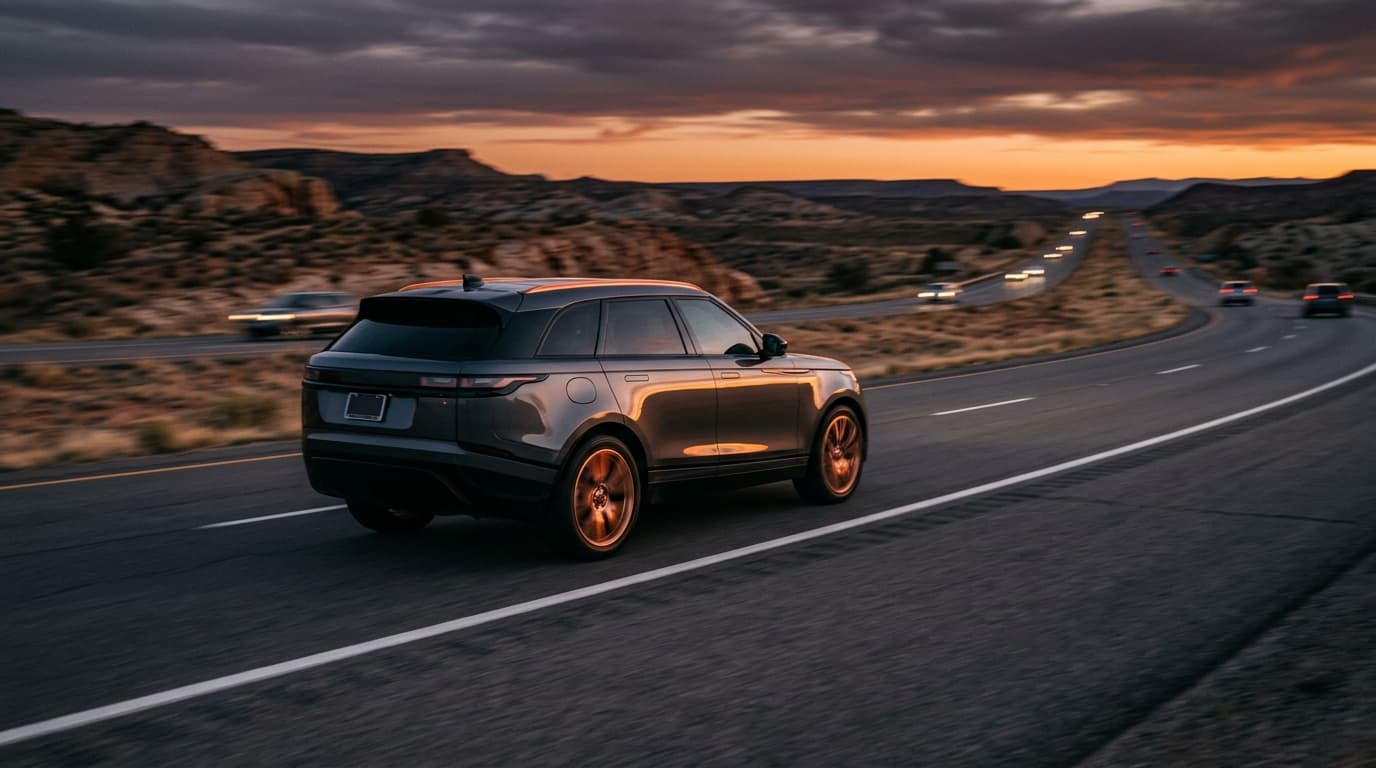
In Belgium, the best hybrid SUV for a high-mileage driver is the Toyota RAV4 Hybrid 218 hp, from €44,950 incl. VAT (TVAc): around 6 L/100 km real on the motorway and the best-rated reliability in the segment. Above 25,000 km a year on pure motorway, still compare it with a good diesel.
Which hybrid SUV to choose when you drive a lot in Belgium?
The Toyota RAV4 Hybrid 218 hp. It combines the segment's best-controlled motorway consumption, around 6 L/100 km real, with proven reliability and the strongest resale value. For a tighter budget, the Renault Austral E-Tech 200 hp, from €36,800 incl. VAT, stays the most affordable hybrid in the comparison.
On the Belgian market, a high-mileage driver judges a hybrid SUV on its consumption at 120 km/h, not on the flattering urban-cycle figure. The RAV4 2.5 Hybrid 218 hp, from €44,950 incl. VAT in its new generation, sits around 5.5 to 6.5 L real in mixed use and stays under 6.5 L on a sustained motorway run, where other hybrid drivelines climb towards 7 L. The number that counts: over 30,000 km a year, every half-litre per 100 means nearly €240 of fuel a year.
The Kia Sportage 1.6 T-GDi HEV 215 hp, from €42,690 incl. VAT, adds a 7-year or 150,000 km warranty, a decisive argument when the car is meant to pass 200,000 km. Its mechanical twin, the Hyundai Tucson 1.6 HEV, shares the same hybrid driveline and the same high-speed behaviour. The Renault Austral E-Tech 200 hp, for its part, smashes prices at €36,800 incl. VAT, at the cost of a multi-mode gearbox that feels less smooth on long straights.
Should you prefer a hybrid or a diesel for the motorway?
Above 25,000 km a year almost entirely on the motorway, a recent diesel stays competitive: 4.5 to 5.5 L/100 km against 6 to 6.8 L for a hybrid SUV at steady speed, according to specialist-press readings. On trips over 500 km at 120 km/h, the diesel keeps the edge of consistency.
In practice, the maths shifts with the road profile. A sales rep who covers 35,000 km a year of pure motorway saves a few hundred euros with a diesel. A high-mileage driver whose trips mix motorway, A-roads and town stretches, on the other hand, recovers the benefit of hybridisation as soon as speed drops. What we would avoid: choosing a hybrid to drive only at 120 km/h, then being surprised to see 6.8 L at the pump.
Why does a hybrid SUV use more fuel on the motorway?
Because at steady speed the electric motor barely intervenes. With no regenerative braking to recharge the battery, the petrol engine works alone, and the battery's extra weight is a penalty. An HEV's real consumption then climbs towards 6.5 to 6.8 L/100 km, against 4 to 5 L in town.
This runs against the usual marketing. The hybrid excels where it recovers energy under braking and runs on electricity at low speed, so in town and on A-roads. On the motorway, both levers disappear: the battery drains fast, the petrol engine alone hauls a mass heavier by 100 to 150 kg, and aerodynamic drag does the rest. Real-consumption readings converge on a 15 to 25 % rise compared with an equivalent diesel at the same speed.
For an SUV, the effect is amplified by frontal area and weight. A RAV4 or a Sportage weighs 1,600 to 1,750 kg empty: at 130 km/h, half the energy goes into the air. The reflex to keep for a high-mileage driver: read the motorway consumption measured by an independent tester, never the WLTP figure copied from the manufacturer's sheet.
How much does a high-mileage hybrid SUV really cost?
Budget about €3,060 of fuel a year at 30,000 km, against close to €2,325 for an equivalent diesel. But fuel is only one line of the budget: 2026 company-car tax and depreciation often weigh more than the gap at the pump.
The fuel maths is simple. At 30,000 km a year and 6.3 L/100 km, a hybrid SUV burns about 1,890 L of petrol at €1.62/L, or €3,060. A diesel at 5 L uses 1,500 L at €1.55/L, or €2,325. The roughly €700 yearly gap shrinks as soon as trips leave the motorway, and it must be weighed against often-lighter hybrid upkeep (no clutch, brakes used less).
On the company side, the rules changed in 2026. For a vehicle ordered from 1 January 2026, deductibility drops to 0 % if it is combustion or hybrid: only 0 g CO₂ vehicles stay 100 % deductible, according to Securex and Moniteur Automobile. A self-employed person taxed as an individual can in principle still deduct a hybrid, but not a legal entity. On top of that comes the benefit in kind (ATN), calculated in 2026 on a reference emission of 70 g/km for petrol and 58 g/km for diesel. For a high-mileage driver in a company, the hybrid has therefore lost its tax appeal against electric. Our electric SUV comparison in Belgium details this shift.
Which hybrid SUV offers the best compromise for a high-mileage driver?
The Toyota RAV4 Hybrid, for its balance between motorway consumption, reliability and resale value. The table cross-references the Belgian list price, real motorway consumption, the key asset and the watch point of each model, for high-mileage use.
| Model | BE price from | Motorway use | Asset | Watch point |
|---|---|---|---|---|
| Toyota RAV4 Hybrid 218 | €44,950 | ~6.0 L | reliability, resale | priciest of the group |
| Kia Sportage 1.6 HEV 215 | €42,690 | ~6.5 L | 7-year warranty | use rises at 130 |
| Hyundai Tucson 1.6 HEV | ~€41,000 | ~6.5 L | comfort, sound insulation | same high-speed limit |
| Renault Austral E-Tech 200 | €36,800 | ~6.0 L | entry price | less smooth multi-mode gearbox |
Two logics stand out. For long-term peace of mind, the RAV4 stays the safe bet: contained motorway consumption, recognised reliability and the best resale, at the cost of a high entry ticket. For value for money, the Renault Austral at €36,800 incl. VAT and the Kia Sportage at €42,690 incl. VAT, with its 7-year warranty, offer the best running cost over heavy mileage. The Hyundai Tucson, the Sportage's twin, plays the comfort and sound-insulation card, welcome when you spend three hours a day at the wheel. For used buying, first check the health of the hybrid driveline using our method in the reliable used SUV comparison.
Which hybrid SUVs should a high-mileage driver avoid?
To avoid first: the plug-in hybrid (PHEV) if you do not charge every day. Empty battery, it tops 8 L/100 km on the motorway while hauling 200 to 300 kg of useless battery, worse than a classic hybrid. The promise of electric range turns against the high-mileage driver who never plugs in.
Three families should be set aside for intensive use. First the unplugged PHEVs, whose real consumption soars once the battery is flat, while they cost €5,000 to €8,000 more to buy than an HEV. Then small underpowered hybrid SUVs, quickly breathless and noisy at 120 km/h, where a high-mileage driver needs firm pick-up and quiet. Finally premium used SUVs, whose upkeep and parts sink the cost per kilometre from the first big service, an item that adds up fast over 30,000 km a year. If a tight budget pushes you towards a versatile family car rather than a pure motorway cruiser, see also our pick of family SUVs under €35,000.
Frequently asked questions
What is the best hybrid SUV for a high-mileage driver in Belgium? The Toyota RAV4 Hybrid 218 hp (from €44,950 incl. VAT). It holds around 6 L/100 km real on the motorway, has the segment's best perceived reliability and the strongest resale value. For a tighter budget, the Renault Austral E-Tech 200 hp starts at €36,800 incl. VAT; the Kia Sportage 1.6 HEV adds a 7-year warranty that reassures on heavy mileage.
Does a hybrid SUV really use less fuel on the motorway? No, that is its weak spot. At steady speed the electric motor barely intervenes: an HEV's real consumption climbs towards 6.5 to 6.8 L/100 km, against 4 to 5 L in town. An equivalent diesel stays under 5.5 L at 120 km/h. The hybrid only regains the edge on a mixed route blending motorway, A-roads and built-up areas.
Hybrid or diesel for a high-mileage driver in Belgium? Above 25,000 km a year almost only on the motorway, a recent diesel stays hard to beat: 4.5 to 5.5 L/100 km against 6 to 6.8 L for an HEV at sustained speed, around €700 of fuel difference per year. As soon as the mileage mixes fast roads and town, the hybrid becomes the rational and simpler choice again.
How much does a high-mileage hybrid SUV cost in fuel? At 30,000 km a year and 6.3 L/100 km, budget about €3,060 of petrol (€1.62/L) for a hybrid SUV, against close to €2,325 for a diesel at 5 L (€1.55/L). The roughly €700 yearly gap must be weighed against upkeep and depreciation, often more favourable to the hybrid.
Does 2026 company-car tax still favour the hybrid in Belgium? No, for a company. A vehicle ordered from 1 January 2026 is 0 % deductible if it is combustion or hybrid; only 0 g CO₂ (electric) vehicles stay 100 % deductible. A self-employed person taxed as an individual can in principle still deduct a hybrid, but not a legal entity. For a high-mileage driver in a company, the maths now leans towards electric or buying ahead of the deadline.
Which hybrid SUV should a high-mileage driver avoid? A plug-in hybrid (PHEV) if you do not charge daily: empty battery, it tops 8 L/100 km on the motorway while hauling 200 to 300 kg of useless battery. Avoid too small underpowered HEVs, noisy and breathless at 120 km/h, and premium used SUVs whose upkeep sinks the cost per kilometre from the first big service.
Which hybrid SUV holds its value best over heavy mileage? The Toyota RAV4 Hybrid, driven by recognised reliability and strong used demand, keeps the segment's best resale value, even at 150,000 km. The Kia Sportage and Hyundai Tucson limit the damage thanks to their long, transferable warranty (7 years for Kia), which reassures the second buyer.
Frequently asked questions
The Toyota RAV4 Hybrid 218 hp (from €44,950 incl. VAT, TVAc). It holds around 6 L/100 km real on the motorway, has the segment's best perceived reliability and the strongest resale value. For a tighter budget, the Renault Austral E-Tech 200 hp starts at €36,800 incl. VAT; the Kia Sportage 1.6 HEV adds a 7-year warranty that reassures on heavy mileage.
No, that is its weak spot. At steady speed the electric motor barely intervenes: an HEV's real consumption climbs towards 6.5 to 6.8 L/100 km, against 4 to 5 L in town. An equivalent diesel stays under 5.5 L at 120 km/h. The hybrid only regains the edge on a mixed route blending motorway, A-roads and built-up areas.
Above 25,000 km a year almost only on the motorway, a recent diesel stays hard to beat: 4.5 to 5.5 L/100 km against 6 to 6.8 L for an HEV at sustained speed, around €700 of fuel difference per year. As soon as the mileage mixes fast roads and town, the hybrid becomes the rational and simpler choice again.
At 30,000 km a year and 6.3 L/100 km, budget about €3,060 of petrol (€1.62/L) for a hybrid SUV, against close to €2,325 for a diesel at 5 L (€1.55/L). The roughly €700 yearly gap must be weighed against upkeep and depreciation, often more favourable to the hybrid.
No, for a company. A vehicle ordered from 1 January 2026 is 0 % deductible if it is combustion or hybrid; only 0 g CO₂ (electric) vehicles stay 100 % deductible. A self-employed person taxed as an individual can in principle still deduct a hybrid, but not a legal entity (a company). For a high-mileage driver in a company, the maths now leans towards electric or buying ahead of the deadline.
A plug-in hybrid (PHEV) if you do not charge daily: empty battery, it tops 8 L/100 km on the motorway while hauling 200 to 300 kg of useless battery. Avoid too small underpowered HEVs, noisy and breathless at 120 km/h, and premium used SUVs whose upkeep sinks the cost per kilometre from the first big service.
The Toyota RAV4 Hybrid, driven by recognised reliability and strong used demand, keeps the segment's best resale value, even at 150,000 km. The Kia Sportage and Hyundai Tucson limit the damage thanks to their long, transferable warranty (7 years for Kia), which reassures the second buyer.
We dig through the Belgian market data — TÜV reliability, real-world ADAC consumption, company-car taxation, list prices — to call it straight. No brand pays us.