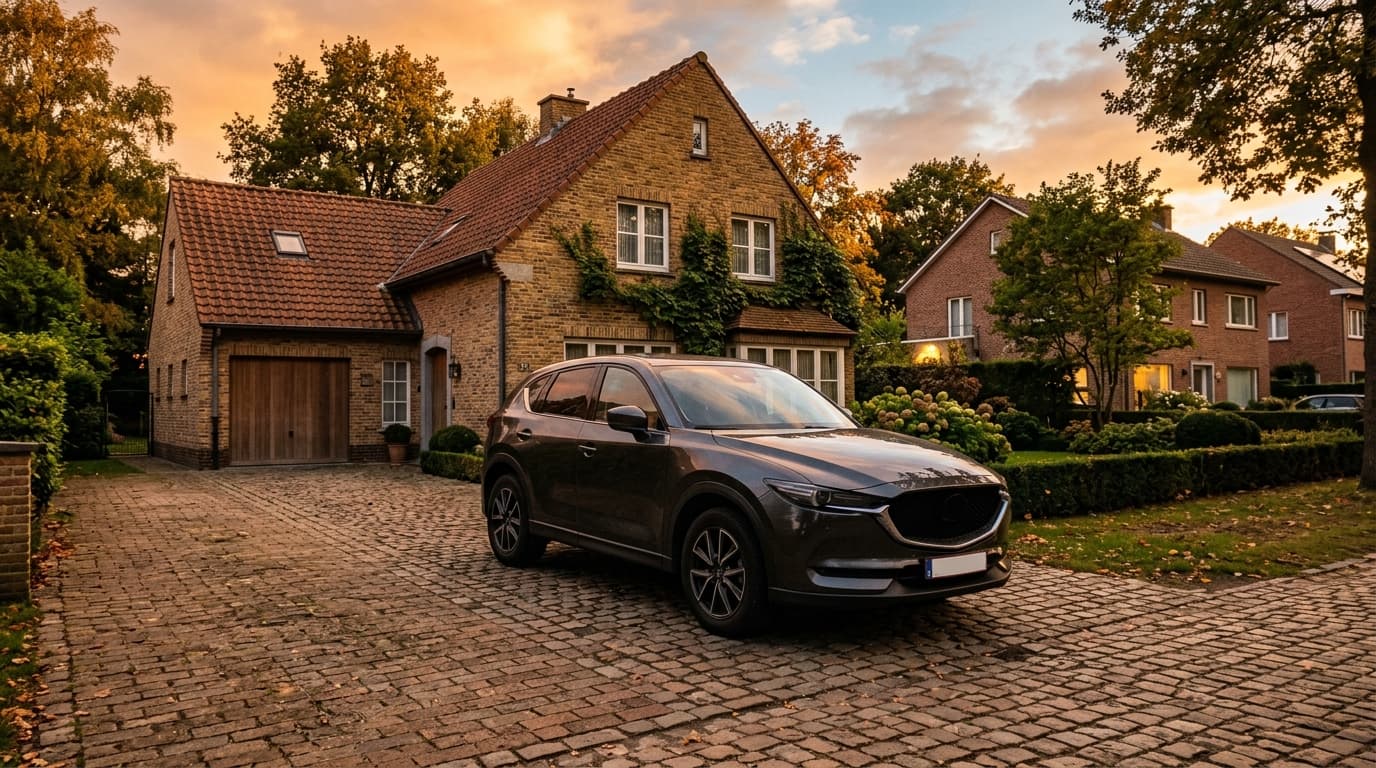
The Peugeot 3008 Hybrid 145 is a good family SUV, but not the full hybrid its name suggests: it is a 48-volt hybrid that uses around 6.1 L/100 km in the real world, against 5.0 L for a Toyota RAV4. At EUR 40,705 incl. VAT in Allure trim on the 2026 Belgian price list, it makes sense mainly when discounted.
What is the Peugeot 3008 hybrid worth on the Belgian market?
A safe bet on presentation and comfort, a notch below the Japanese on fuel use. The 3008 III Hybrid 145 e-DSC6 starts at EUR 40,705 incl. VAT in Allure and tops out at EUR 46,955 in GT Exclusive on the 2026 Belgian list, with a 520 L boot and real consumption around 6.1 L.
On the Belgian market, the 3008 remains one of the best-selling compact SUVs, and the third generation launched in 2024 clearly raised the finish level. The cabin with its panoramic i-Cockpit has little left to envy the Germans, the driving position is low for an SUV, and sound insulation holds up on the motorway.
The number that counts: EUR 40,705 incl. VAT, the Belgian entry ticket for the Hybrid 145 in Allure trim. The trims above sit at EUR 42,205 (Allure Business), EUR 44,655 (GT) and EUR 46,955 (GT Exclusive) according to the list prices recorded by AutoGids for the 2026 model year. Those figures matter, because they place the 3008 only a few thousand euros away from a Toyota RAV4 Hybrid (from EUR 44,950 incl. VAT) or a Kia Sportage 1.6 T-GDi HEV (from EUR 42,690), two genuine full hybrids.
Is the 3008 "Hybrid 145" a real hybrid?
No, not in the Toyota sense. It is a 48-volt hybrid: a 21 kW electric motor built into the e-DSC6 gearbox, fed by a battery of about 0.9 kWh. It handles manoeuvres, restarts and short low-speed phases, but it never drives the car on electricity on an A-road.
This is misunderstanding number one among Belgian families coming from a diesel and looking for "a hybrid 3008". The Stellantis 48 V driveline works well within its remit: it smooths starts, allows electric running in car parks and at very low speed, and Peugeot claims up to half the driving time in town without the petrol engine. But the battery is too small to last more than a few hundred metres, and the petrol engine takes over as soon as speed rises.
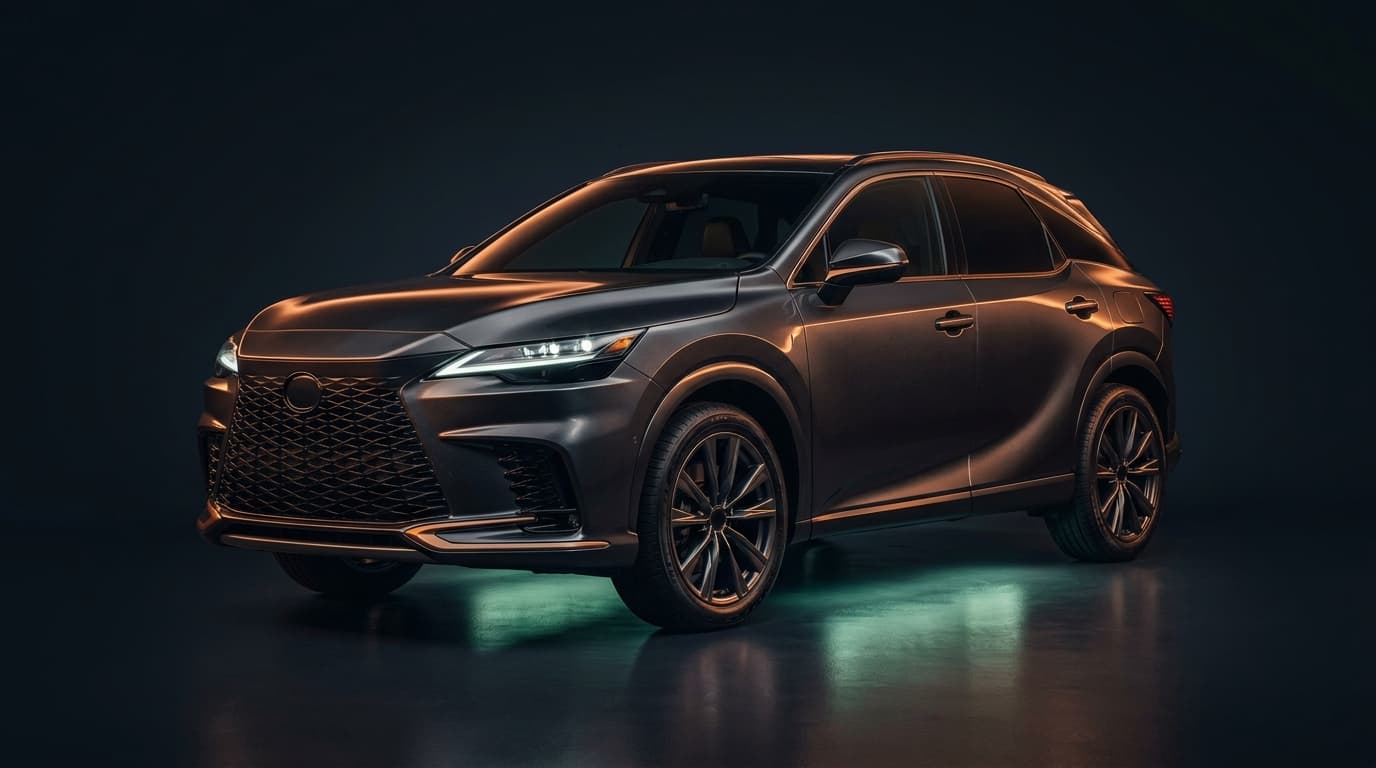
In practice, this gives better refinement than a pure petrol car, but a modest fuel saving. A self-charging full hybrid like the RAV4 or the Sportage HEV carries a far more powerful electric motor and a battery that lets it shut off the petrol engine in traffic, at lights and on the approach to roundabouts. The technical difference is set out in our full hybrid vs mild hybrid comparison.
How much does a 3008 hybrid really use?
Around 6.1 L/100 km in real mixed use on the Hybrid 145, against 5.3 L claimed on the WLTP cycle. The 0.8 L gap is normal for the segment, but it places the 3008 roughly 1 L above a RAV4 full hybrid on a comparable route.
Road-test readings converge around 6 to 6.3 L for the hybridised 1.2 turbo three-cylinder, with peaks above 7 L on a busy motorway and dips under 5.5 L on a free-flowing A-road. The three-cylinder holds up decently at steady speed, but it works harder than a naturally aspirated four-cylinder as soon as you load the car with four passengers and luggage.
The Belgian maths is simple. At 15,000 km a year, 6.1 L at EUR 1.62/L means about EUR 1,480 of petrol over the year. A RAV4 at 5.0 L drops to EUR 1,215, a gap of EUR 265 a year, just under EUR 1,600 over six years. That is not a deal-breaker, but it is enough to cancel part of the list-price gap if you cover a lot of kilometres.
Is the Peugeot 3008 hybrid reliable?
The historic flaw is fixed: the 1.2 PureTech in the 3008 III runs a timing chain instead of the wet belt that earned the engine a disastrous reputation. The new watch point is the e-DSC6 dual-clutch gearbox.
This needs to be said plainly, because it drives both used and new purchases. Earlier generations of the 1.2 PureTech piled up failures linked to the degradation of the oil-bathed timing belt, with four-figure engine bills. The EB2ADTSH block fitted to the 3008 III drops that design. It is this generation's main reliability argument, and it is a real one.
What we would avoid: signing without driving the car from cold. Owner reports on the 3008 III now focus on the e-DSC6 gearbox, which packs two clutches, the 48 V electric machine and the selection actuator: running noises, low-speed jerks and hesitant shifts have been reported on recent cars. On that front, Toyota's mechanical layout, simpler because it has no clutch, keeps an edge, as our ranking of the most reliable SUV brands points out.
What warranty comes with the 3008 in Belgium?
Peugeot covers the 3008 with a 2-year manufacturer warranty with no mileage limit, extendable at extra cost. That is the European legal minimum, to be compared with Hyundai's 5 years and above all Kia's 7 years or 150,000 km on the Sportage. For a family planning to keep the car eight to ten years, that difference in cover weighs more than half a litre of fuel.
3008 hybrid, RAV4 or Sportage: which one for a Belgian family?
The RAV4 for the high-mileage driver who keeps the car a long time, the Sportage for whoever wants the longest warranty, the 3008 for the driver who covers few kilometres and gets a real discount. At full list price, the two full hybrids are more rational.
The table cross-references the 2026 Belgian list price, measured real consumption, the type of hybridisation, boot space and manufacturer warranty.
| Model | BE price from | Real use | Hybrid type | Boot | Warranty |
|---|---|---|---|---|---|
| Peugeot 3008 Hybrid 145 | EUR 40,705 | ~6.1 L | 48 V (mild) | 520 L | 2 years |
| Kia Sportage 1.6 HEV 215 | EUR 42,690 | ~5.3 L | full hybrid | 587 L | 7 years |
| Toyota RAV4 Hybrid 218 | EUR 44,950 | ~5.0 L | full hybrid | ~580 L | 3 years (up to 10) |
Three profiles stand out clearly. A family covering 25,000 km a year has every reason to pay the EUR 4,000 gap for the RAV4: the fuel saving and the resale value make up the difference within a few years. A family keeping the car ten years will find in the Sportage's 7-year warranty a peace of mind that neither Peugeot nor Toyota match at base price. The 3008 becomes the smart call when the discount brings it below EUR 36,000, which happens regularly on Belgian clearance campaigns, and when annual mileage stays modest.
A word on the boot: 520 L in the 3008, roughly 60 L less than its two rivals. On a week's holiday with four people and a pushchair, you feel it. The duel between the two full hybrids is covered in our Toyota RAV4 vs Kia Sportage comparison, and the whole segment is ranked on real consumption in our hybrid SUV comparison in Belgium.
Should you go for the 3008 plug-in hybrid or the electric e-3008?
The Plug-in Hybrid 195 only if you charge every day, the electric e-3008 if you drive a company car. The plug-in version claims 93 to 97 km of electric range on the WLTP cycle, enough to absorb an average Belgian commute without a drop of petrol.
The L'Argus road test published in October 2025 confirms those homologation figures on the Plug-in Hybrid 195, the third generation's plug-in version. For a household with a charger at home doing 40 km a day, the car runs on electricity during the week and keeps its petrol engine for the holidays. With no charging point, it becomes a petrol SUV weighed down by 200 to 300 kg of useless battery, for several thousand euros more.
ADAC/TUV data show that the real gap between a charged PHEV and a PHEV that is never plugged in exceeds 4 L/100 km, which makes the charger the true purchase criterion, ahead of the badge. And on tax, the Belgian picture has changed: a combustion or hybrid vehicle ordered from 1 January 2026 is 0 % deductible for a company, while a 0 g CO2 car stays at 100 %. The full rules are in our guide to company-car SUV tax in Belgium.
What we would avoid with the Peugeot 3008 hybrid
To avoid first: paying full list price for the Hybrid 145 believing you are buying a full hybrid. At EUR 44,655 in GT trim, you are EUR 300 away from a Toyota RAV4 Hybrid that uses 1 L less per 100 and holds its value better. That is the most common wrong call on this model.
Two other traps recur. The first is buying the PHEV 195 with no charging point: the electric promise turns against the buyer who never plugs in, and the extra cost never pays back. The second is skipping the cold test of the e-DSC6 gearbox, the most-reported component on this generation.
That said, the 3008 hybrid keeps real strengths for a Belgian family: an interior presentation above its Japanese rivals, a pleasant chassis, and frequent discounts on the Belgian market that can bring it EUR 5,000 under its advertised price. Bought at that price, with reasonable annual mileage, it is a defensible choice. Bought at full price to cover 30,000 km a year, it is not.
Frequently asked questions
Is the Peugeot 3008 hybrid a real hybrid? Not in the Toyota RAV4 sense. The 3008 Hybrid 145 is a 48-volt hybrid: a 21 kW electric motor housed in the e-DSC6 gearbox, fed by a small battery of about 0.9 kWh. It handles manoeuvres, restarts and short low-speed phases, but it will not drive the car on electricity on an A-road. A full hybrid like the RAV4 or the Sportage HEV shuts off its petrol engine far more often.
How much does a Peugeot 3008 hybrid really use? Budget around 6.1 L/100 km in real mixed use on the Hybrid 145 version, against 5.3 L claimed on the WLTP cycle. In town, the gap with a conventional petrol car narrows to about 1 L per 100. A Toyota RAV4 full hybrid drops closer to 5.0 L on the same kind of route, and a Kia Sportage 1.6 HEV to 5.3 L. Over 15,000 km a year, that one-litre gap is worth nearly EUR 240.
What is the price of the Peugeot 3008 hybrid in Belgium? The 2026 Belgian price list puts the 3008 1.2 Hybrid 145 e-DSC6 at EUR 40,705 incl. VAT in Allure trim, EUR 42,205 in Allure Business, EUR 44,655 in GT and EUR 46,955 in GT Exclusive (AutoGids list prices). Clearance campaigns regularly bring the Allure below EUR 35,000, which completely changes the maths against a RAV4 at EUR 44,950.
Is the Peugeot 3008 hybrid reliable? The big historic flaw is fixed: the 1.2 PureTech in the 3008 III uses a timing chain instead of the wet belt that gave the engine its bad reputation. The watch point has moved to the e-DSC6 dual-clutch gearbox, on which jerks, noises and hesitant shifts have been reported by owners of recent cars. Have it tested from cold before you buy.
3008 hybrid or Toyota RAV4: which one for a family? The RAV4 if the car covers a lot of kilometres over many years: full hybrid, 5.0 L real, 580 L of boot space and the best resale value in the segment, for EUR 44,950 incl. VAT. The 3008 Hybrid 145 if you drive under 15,000 km a year and the discount brings it below EUR 36,000: better-finished interior, lower driving position, a 520 L boot that is enough for four. At full list price, the RAV4 is the rational choice.
Should you take the 3008 plug-in hybrid rather than the Hybrid 145? Only if you can plug it in every day. The 3008 Plug-in Hybrid 195 claims 93 to 97 km of electric range on the WLTP cycle (L'Argus road test, October 2025), enough to cover an average Belgian commute without petrol. With no charger at home or at the office, it becomes a heavy petrol SUV hauling its battery around for several thousand euros more. What we would avoid: buying the PHEV for the spec sheet.
Is the 3008 hybrid still worth it as a company car in 2026? No. A combustion or hybrid vehicle ordered from 1 January 2026 is 0 % deductible for the company; only 0 g CO2 cars stay at 100 %. An employee with a company car who wants a 3008 should therefore look at the electric e-3008. For a private purchase the reasoning changes: company-car tax no longer applies and only the real price counts.
Frequently asked questions
Not in the Toyota RAV4 sense. The 3008 Hybrid 145 is a 48-volt hybrid: a 21 kW electric motor housed in the e-DSC6 gearbox, fed by a small battery of about 0.9 kWh. It handles manoeuvres, restarts and short low-speed phases, but it will not drive the car on electricity on an A-road. A full hybrid like the RAV4 or the Sportage HEV shuts off its petrol engine far more often.
Budget around 6.1 L/100 km in real mixed use on the Hybrid 145 version, against 5.3 L claimed on the WLTP cycle. In town, the gap with a conventional petrol car narrows to about 1 L per 100. A Toyota RAV4 full hybrid drops closer to 5.0 L on the same kind of route, and a Kia Sportage 1.6 HEV to 5.3 L. Over 15,000 km a year, that one-litre gap is worth nearly EUR 240.
The 2026 Belgian price list puts the 3008 1.2 Hybrid 145 e-DSC6 at EUR 40,705 incl. VAT in Allure trim, EUR 42,205 in Allure Business, EUR 44,655 in GT and EUR 46,955 in GT Exclusive (AutoGids list prices). Clearance campaigns regularly bring the Allure below EUR 35,000, which completely changes the maths against a RAV4 at EUR 44,950.
The big historic flaw is fixed: the 1.2 PureTech in the 3008 III uses a timing chain instead of the wet belt that gave the engine its bad reputation. The watch point has moved to the e-DSC6 dual-clutch gearbox, on which jerks, noises and hesitant shifts have been reported by owners of recent cars. Have it tested from cold before you buy.
The RAV4 if the car covers a lot of kilometres over many years: full hybrid, 5.0 L real, 580 L of boot space and the best resale value in the segment, for EUR 44,950 incl. VAT. The 3008 Hybrid 145 if you drive under 15,000 km a year and the discount brings it below EUR 36,000: better-finished interior, lower driving position, a 520 L boot that is enough for four. At full list price, the RAV4 is the rational choice.
Only if you can plug it in every day. The 3008 Plug-in Hybrid 195 claims 93 to 97 km of electric range on the WLTP cycle (L'Argus road test, October 2025), enough to cover an average Belgian commute without petrol. With no charger at home or at the office, it becomes a heavy petrol SUV hauling its battery around for several thousand euros more. What we would avoid: buying the PHEV for the spec sheet.
No. A combustion or hybrid vehicle ordered from 1 January 2026 is 0 % deductible for the company; only 0 g CO2 cars stay at 100 %. An employee with a company car who wants a 3008 should therefore look at the electric e-3008. For a private purchase the reasoning changes: company-car tax no longer applies and only the real price counts.
We dig through the Belgian market data — TÜV reliability, real-world ADAC consumption, company-car taxation, list prices — to call it straight. No brand pays us.