
For a Belgian commuter driving 30 to 80 km a day between home and work, the best hybrid SUV is the Toyota RAV4 Hybrid 218 hp, from EUR 44,950 incl. VAT (TVAc): around 5 L/100 km real in mixed use, its best ground. For a mostly urban commute, a compact hybrid is enough and costs EUR 10,000 less.
Which hybrid SUV to choose for the home-to-work run?
The Toyota RAV4 Hybrid 218 hp for family space, around 5 L/100 km real on a route mixing town and A-roads. For a tighter budget or a mostly urban commute, a compact like the Toyota Yaris Cross 130 hp drops below 4.5 L and starts EUR 10,000 lower.
On the Belgian market, a commuter judges a hybrid SUV on its consumption in town and on A-roads, where it spends most of its time. The RAV4 2.5 Hybrid 218 hp, from EUR 44,950 incl. VAT, drops to around 5 L/100 km real on a mixed commute, against 6.5 L on pure motorway. The number that counts: on a home-to-work run, every litre saved per 100 means nearly EUR 240 a year at 15,000 km.
ADAC/TUV data show that the Honda CR-V e:HEV 184 hp, from ~EUR 48,000 incl. VAT, runs on electricity most of the time in built-up areas: its hybrid driveline favours the electric motor, with the petrol engine as a generator, making it one of the best in town. The Kia Sportage 1.6 T-GDi HEV 215 hp, from EUR 42,690 incl. VAT, adds a 7-year or 150,000 km warranty, reassuring as commuting kilometres pile up. Its mechanical twin, the Hyundai Tucson 1.6 HEV (from ~EUR 41,000), shares the same hybrid driveline and plays the comfort and sound-insulation card.
Why is the hybrid at its best for a commuter?
Because commuting combines town and roads at low speed, exactly where the hybrid recovers energy under braking and runs on electricity. A RAV4 drops to 5 L on the home-to-work cycle, against 6.5 L on pure motorway: the opposite of the common belief.
In practice, this gives ideal behaviour for the commute. At lights, in slow traffic and at low speed, the electric motor takes over; at every braking, the battery recharges without going through the pump. On a 30 to 80 km home-to-work route mixing town crossings and A-roads, both levers work constantly. It is the opposite of the motorway, where the electric side barely helps and consumption climbs.
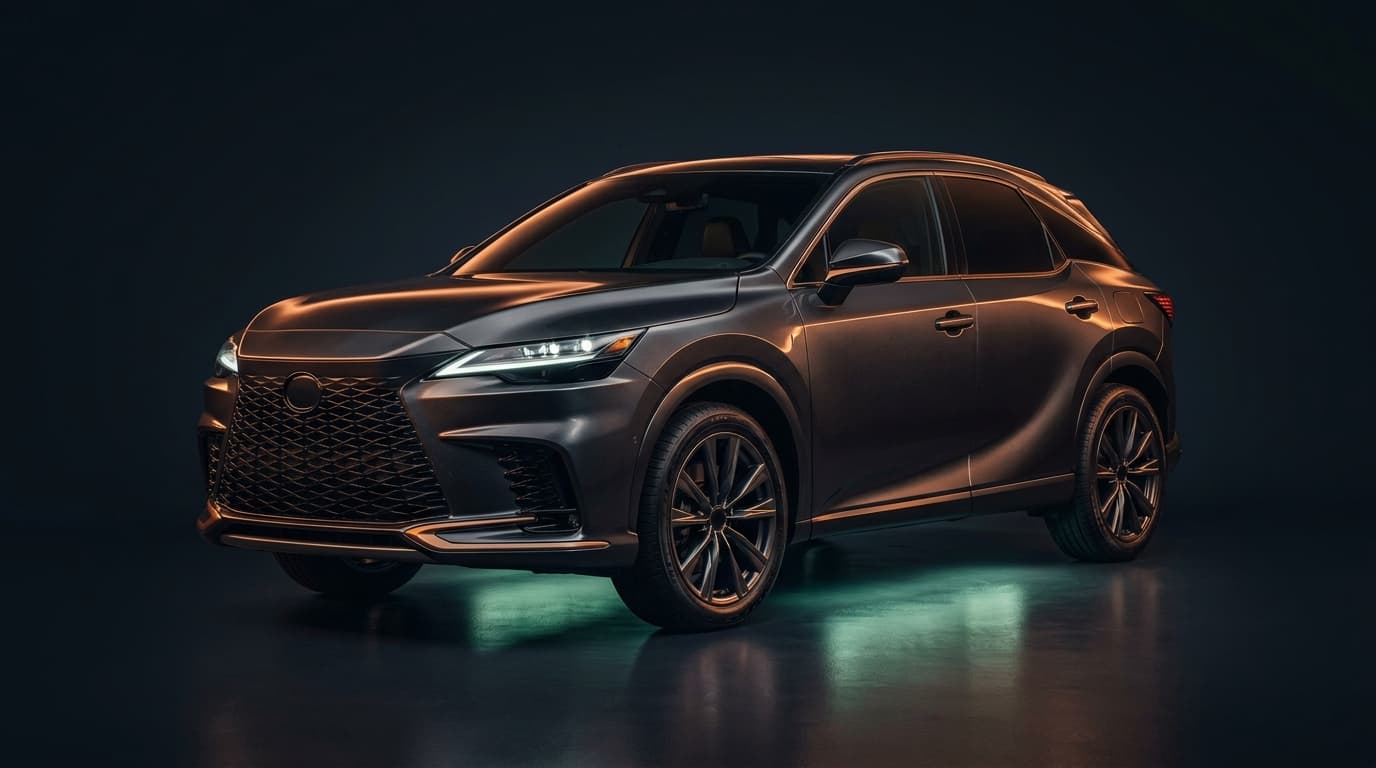
Real-consumption readings converge: in urban and suburban use, an HEV claws back 2 to 3 L per 100 against an equivalent petrol car. It is one of the rare segments where the hybrid repays its extra cost fast. To understand the difference between a true full hybrid and a mild hybrid that brings almost nothing in town, see our full hybrid vs mild hybrid comparison.
Big SUV or compact for the commute?
A compact suits most commuters. On a 30 to 80 km solo run, a Toyota Yaris Cross 130 hp (from ~EUR 29,000) uses under 4.5 L, parks more easily and costs EUR 10,000 less than a RAV4. The big SUV is only justified if the car also serves family, holidays or towing.
The table cross-references the Belgian list price, real mixed-commute consumption, the key asset and the watch point of each model, for home-to-work use.
| Model | BE price from | Commute use | Asset | Watch point |
|---|---|---|---|---|
| Toyota Yaris Cross 130 | ~EUR 29,000 | ~4.5 L | price, town use | smaller, 397 L boot |
| Hyundai Tucson 1.6 HEV | ~EUR 41,000 | ~5.4 L | comfort, quiet | 5-year warranty |
| Kia Sportage 1.6 HEV 215 | EUR 42,690 | ~5.3 L | 7-year warranty | gearbox less smooth cold |
| Toyota RAV4 Hybrid 218 | EUR 44,950 | ~5.0 L | space, resale | body size for town |
| Honda CR-V e:HEV 184 | ~EUR 48,000 | ~5.5 L | runs electric in town | priciest of the group |
Two logics stand out. For a mostly urban, solo commute, the compact hybrid is the rational choice: cheaper to buy, thriftier in town, more nimble. For a commuter who doubles the use with family life, the RAV4 or the Sportage justify their size. What we would avoid: paying EUR 45,000 for a 1,700 kg family car to drive 50 km of A-road alone five days out of seven.
And on very short trips (under 10 km)?
Below about 6 km, the hybrid edge fades. The petrol engine runs to warm up and reach operating temperature, especially on a Belgian winter morning, and the battery has no time to work well. A commuter doing 4 km door to door will gain more from an electric bike or a fully electric vehicle than from a hybrid SUV. The HEV's ideal profile stays the 30 to 80 km commute, engine warm for most of the trip.
How much does a hybrid SUV really use on the daily run?
Budget about 5 L/100 km real for a family hybrid SUV on a mixed commute, and under 4.5 L for a compact. At 15,000 km a year, that means nearly EUR 1,215 of petrol for the family car, against EUR 875 for a compact over 12,000 km.
The maths is simple. A RAV4 at 5 L over 15,000 km burns 750 L of petrol at EUR 1.62/L, or about EUR 1,215. A Yaris Cross at 4.3 L over 12,000 km uses 516 L, or EUR 836. The consumption gap against an equivalent petrol car reaches 2 to 3 L per 100 in urban use, which, on a daily commute, offsets the hybrid's higher purchase price within a few years.
Be careful, though, not to confuse a commuter with a high-mileage driver. If your trip is really 90 % motorway at 120 km/h, the hybrid loses its appeal and a diesel or electric becomes more logical again: the detail is in our best hybrid SUV for high-mileage drivers comparison. For the segment overview, our hybrid SUV comparison in Belgium ranks the models on real consumption.
Is a hybrid SUV still worth it as a company car in 2026?
Not for a company. A vehicle ordered from 1 January 2026 is 0 % deductible if it is combustion or hybrid; only 0 g CO2 (electric) vehicles stay 100 % deductible, according to Securex and Moniteur Automobile. For a company-car commuter, electric now wins.
The shift is clear. Until 2025, the hybrid offered a decent tax compromise for the employee with a company car. In 2026, 0 % deductibility puts it level with a pure combustion car, while electric keeps its 100 %. On top comes the benefit in kind (ATN), calculated on a reference emission of 70 g/km for petrol in 2026. A commuter whose employer funds the car therefore has every reason to look at electric.
For a private purchase, however, the reasoning flips. An individual paying for the car out of pocket and doing 30 to 80 km of mixed commute a day finds in the hybrid the best thrift-and-simplicity compromise, with no charging constraint. That is exactly the profile where the hybrid keeps all its sense in 2026.
Which hybrid SUV should a commuter avoid?
To avoid first: the plug-in hybrid (PHEV) bought without ever plugging it in. Empty battery, it uses more than a classic HEV while hauling 200 to 300 kg of useless battery, even though it costs EUR 5,000 to 8,000 more to buy. For a commuter with no charger, it is the wrong call.
Three traps recur. First the unplugged PHEV, whose electric promise turns against the buyer who never charges. Then the mild hybrid sold under the 'hybrid' label: it never runs on electricity and brings almost nothing in town, exactly where the commuter needs it most. Finally the oversized body: a 1,700 kg family car for a 40 km solo commute stays heavy, expensive to buy and less nimble than a compact. If your use is more family-oriented, our pick of family SUVs under EUR 35,000 opens other options.
Frequently asked questions
What is the best hybrid SUV for a commuter in Belgium? The Toyota RAV4 Hybrid 218 hp (from EUR 44,950 incl. VAT) if you want family space: around 5 L/100 km real on a home-to-work route mixing town and A-roads. For a mostly urban commute or a tight budget, a compact hybrid like the Toyota Yaris Cross 130 (from ~EUR 29,000) drops below 4.5 L and costs EUR 10,000 less. The Kia Sportage 1.6 HEV adds a 7-year warranty, the Honda CR-V e:HEV excels in town.
Does a hybrid SUV use less fuel on the home-to-work run? Yes, that is its best ground. In town and on A-roads at low speed, the hybrid recovers energy under braking and runs on electricity at lights and in traffic. A RAV4 drops to around 5 L/100 km real on a mixed commute, against 6.5 L on pure motorway. The Honda CR-V e:HEV even runs on electricity most of the time in built-up areas.
Big SUV or compact for the daily commute? A compact suits most commuters. On a 30 to 80 km home-to-work run, a Toyota Yaris Cross 130 hp (from ~EUR 29,000) uses under 4.5 L, parks more easily and costs EUR 10,000 less than a RAV4. The big SUV is only justified if the car also serves holidays, children or towing. What we would avoid: paying EUR 45,000 for a family-size body to drive 50 km of A-road alone.
How much does a commuter's hybrid SUV cost in fuel? At 15,000 km a year and 5 L/100 km, budget about EUR 1,215 of petrol (EUR 1.62/L) for a family hybrid SUV, and close to EUR 875 for a compact at 4.5 L over 12,000 km. In town the hybrid claws back 2 to 3 L per 100 against an equivalent petrol car, one of the rare segments where it repays its extra cost fast.
Is a hybrid SUV still worth it as a company car in 2026? Not for a company. A vehicle ordered from 1 January 2026 is 0 % deductible if it is combustion or hybrid; only 0 g CO2 (electric) vehicles stay 100 %. For a company-car commuter, electric now wins on tax. For a private buyer (individual), the hybrid stays smart on an urban commute, where its real consumption is lowest.
Is the hybrid penalised on very short trips? Yes, below about 6 km. The petrol engine runs to warm up and reach operating temperature, which erases part of the hybrid gain, especially on a Belgian winter morning. A 30 to 80 km home-to-work run, engine warm for most of the trip, stays the ideal profile. For a 3 km commute, electric or a bike is more logical than a hybrid SUV.
Which hybrid SUV should a commuter avoid? A plug-in hybrid (PHEV) bought without ever charging it: empty battery, it uses more than an HEV and costs EUR 5,000 to 8,000 more. Also avoid a mild hybrid sold as a 'hybrid': it never runs on electricity and brings almost nothing in town. Finally, a 1,700 kg family-size body for a 40 km solo commute stays oversized.
Frequently asked questions
The Toyota RAV4 Hybrid 218 hp (from EUR 44,950 incl. VAT) if you want family space: around 5 L/100 km real on a home-to-work route mixing town and A-roads. For a mostly urban commute or a tight budget, a compact hybrid like the Toyota Yaris Cross 130 (from ~EUR 29,000) drops below 4.5 L and costs EUR 10,000 less. The Kia Sportage 1.6 HEV adds a 7-year warranty, the Honda CR-V e:HEV excels in town.
Yes, that is its best ground. In town and on A-roads at low speed, the hybrid recovers energy under braking and runs on electricity at lights and in traffic. A RAV4 drops to around 5 L/100 km real on a mixed commute, against 6.5 L on pure motorway. The Honda CR-V e:HEV even runs on electricity most of the time in built-up areas.
A compact suits most commuters. On a 30 to 80 km home-to-work run, a Toyota Yaris Cross 130 hp (from ~EUR 29,000) uses under 4.5 L, parks more easily and costs EUR 10,000 less than a RAV4. The big SUV is only justified if the car also serves holidays, children or towing. What we would avoid: paying EUR 45,000 for a family-size body to drive 50 km of A-road alone.
At 15,000 km a year and 5 L/100 km, budget about EUR 1,215 of petrol (EUR 1.62/L) for a family hybrid SUV, and close to EUR 875 for a compact at 4.5 L over 12,000 km. In town the hybrid claws back 2 to 3 L per 100 against an equivalent petrol car, one of the rare segments where it repays its extra cost fast.
Not for a company. A vehicle ordered from 1 January 2026 is 0 % deductible if it is combustion or hybrid; only 0 g CO2 (electric) vehicles stay 100 %. For a company-car commuter, electric now wins on tax. For a private buyer (individual), the hybrid stays smart on an urban commute, where its real consumption is lowest.
Yes, below about 6 km. The petrol engine runs to warm up and reach operating temperature, which erases part of the hybrid gain, especially on a Belgian winter morning. A 30 to 80 km home-to-work run, engine warm for most of the trip, stays the ideal profile. For a 3 km commute, electric or a bike is more logical than a hybrid SUV.
A plug-in hybrid (PHEV) bought without ever charging it: empty battery, it uses more than an HEV and costs EUR 5,000 to 8,000 more. Also avoid a mild hybrid sold as a 'hybrid': it never runs on electricity and brings almost nothing in town. Finally, a 1,700 kg family-size body for a 40 km solo commute stays oversized.
We dig through the Belgian market data — TÜV reliability, real-world ADAC consumption, company-car taxation, list prices — to call it straight. No brand pays us.