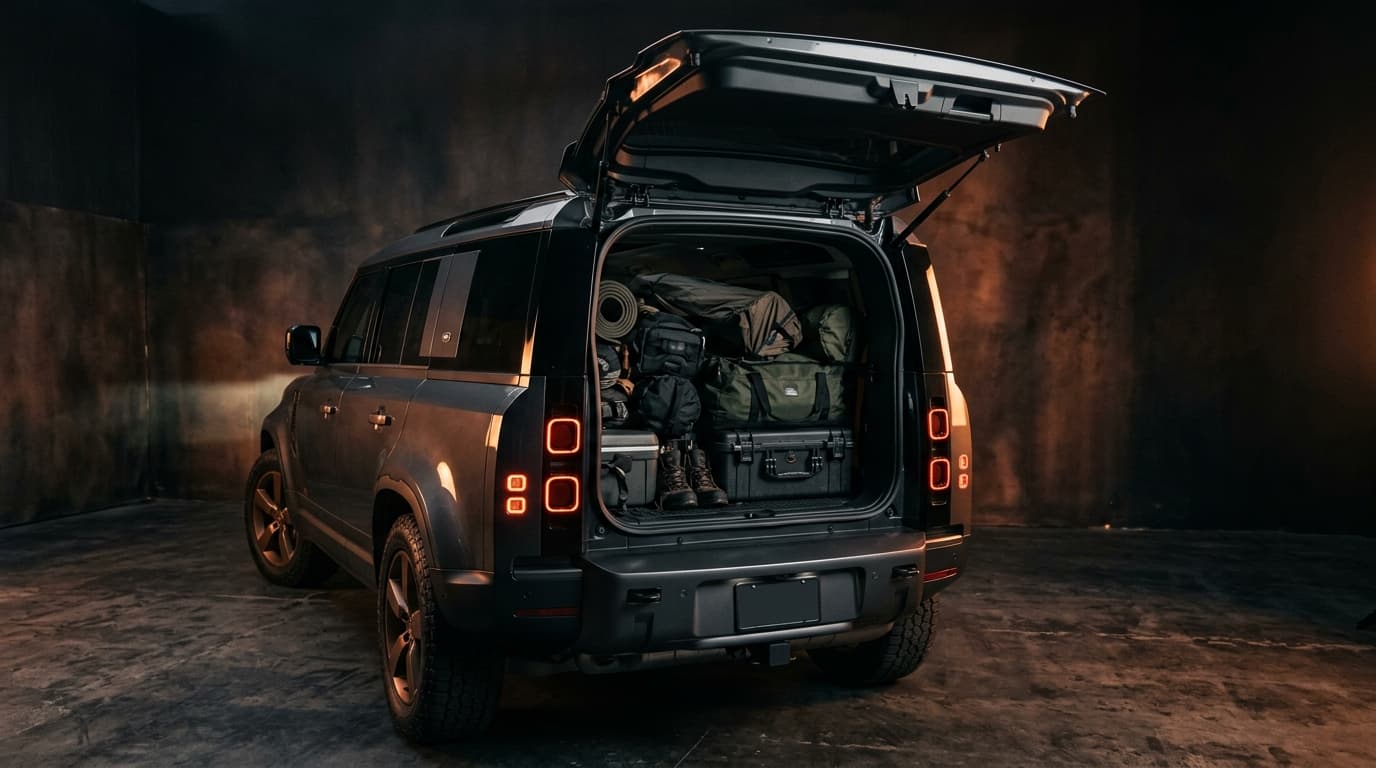
On the Belgian market, the SUV with the biggest boot is the Skoda Kodiaq: 910 litres in five-seat mode, according to manufacturer data. But that catalogue figure hides three traps — seven-seat mode, the plug-in hybrid version and the sloping roof of coupe SUVs. Here is the real ranking, in measured litres, and what we'd avoid.
Which SUV has the biggest boot in Belgium?
The Skoda Kodiaq leads the ranking with 910 litres in five-seat configuration, closely chased by the Kia Sorento and its 902 litres of usable volume. Among large premium models, the Audi Q7 climbs to 865 litres. The Kodiaq's ceiling figure: 2,105 litres once the bench is folded.
In practice, that means one of the longest loading floors on the market, whether for a recumbent bike or a chest of drawers. On the Belgian market, this trio of large SUVs remains the safe bet as soon as you regularly load up with five aboard. The Peugeot 5008 completes the leading pack with 780 litres, expandable to 1,940 litres, as detailed in our Skoda Kodiaq versus Peugeot 5008 comparison.
| SUV | Boot 5 seats (L) | Seats folded (L) | Segment |
|---|---|---|---|
| Skoda Kodiaq | 910 | 2,105 | Family |
| Kia Sorento | 902 | 2,085 | 7-seat |
| Audi Q7 | 865 | ~2,050 | Premium |
| Tesla Model Y | 854 (+117 frunk) | ~2,100 | Electric |
| Peugeot 5008 | 780 | 1,940 | 7-seat |
| Dacia Bigster | 677 | — | Compact |
| Volkswagen Tiguan | 652 | — | Compact |
| Kia Sportage | 591 | — | Compact |
| Toyota RAV4 | 580 | — | Compact hybrid |
| Nissan Qashqai | 504 | — | Compact |
How do you actually read a boot volume?
Boot volume is measured in litres to the VDA standard: one-litre blocks are stacked up to the parcel shelf. The honest figure is therefore the five-seat volume with the shelf in place, not the theoretical maximum. The Kodiaq's 910 litres are measured this way, bench in position and shelf removed.
The seats-folded figure, by contrast, is calculated up to the roof and inflates fast: 2,105 litres for that same Kodiaq. What we'd avoid: comparing two SUVs on that maximum volume alone, which reflects no daily use. Manufacturer data and measurements from AutoScout24 Belgium show the gap between usable and maximum volume can exceed 1,000 litres on a large SUV. The right reflex: always compare like for like, five seats against five seats.
Which compact SUVs offer the biggest boot?
Among compacts, the surprise comes from the Dacia Bigster: up to 677 litres in mild-hybrid petrol, a large-SUV volume at a compact price. It beats the Volkswagen Tiguan (652 litres) and the Kia Sportage (591 litres). The hybrid Toyota RAV4 tops out at 580 litres and the Nissan Qashqai at 504 litres.
The figure that matters: the Bigster holds about 170 litres more than the Qashqai, a large extra suitcase, for a lower purchase price. On the Belgian market, it is currently the best litres-per-euro ratio in the compact segment. What we'd avoid in this class: plug-in hybrid versions, whose under-floor battery eats into the boot, and coupe body styles with sloping roofs, which sacrifice litres to looks. For family use, a well-designed conventional compact carries more than a pricier coupe SUV.
Does 7-seat mode sabotage the boot?
Yes, and it's the most common trap. In seven-seat configuration, the deployed third row takes up all the loading space. The Skoda Kodiaq falls from 910 to 340 litres, and the Kia Sorento drops below 190 litres — enough for two shopping bags, not the luggage of seven people.
In practice, that means a simple equation: a seven-seat SUV is only a big boot in five-seat mode, third row folded into the floor. Specialist Belgian guides, such as MyWay, point out that few seven-seaters offer a real boot with every seat occupied. What we'd avoid: buying a seven-seater expecting to holiday seven-up with the suitcases. For that use, aim for a very large body or accept a trailer. Our feature on the Kia EV9 versus Peugeot e-5008 details this trade-off on the electric side.
Do electric SUVs have a real boot and a frunk?
Some even add an advantage combustion cars don't have: the frunk, a front boot under the bonnet, where the engine used to sit. The Tesla Model Y offers about 117 litres at the front on top of its 854 litres at the rear, perfect for stowing charging cables without dirtying the cabin.
Not every electric SUV is so lucky. The Skoda Enyaq offers a 585-litre rear boot but no usable frunk, because its platform wasn't designed for one. The figure that matters: on an electric SUV derived from a combustion base, the frunk is often limited to a token tray of a few litres. What we'd avoid: assuming electric automatically means front boot. Better to check the spec, as charging storage is handled differently from model to model, as we explain in our guide to the best electric SUV in Belgium.
Which big-boot SUV should you choose for your use?
For a family of five that loads up often, the Skoda Kodiaq and its 910 litres remain the rational benchmark: long floor, low sill, well-judged modularity. On a tight budget, the Dacia Bigster (up to 677 litres) offers the best litres-per-euro ratio on the Belgian market, with no deal-breaking compromise on space.
To move house often, tow or carry bulk, a combustion seven-seater used in five-seat mode — Kodiaq, Peugeot 5008 or Kia Sorento — gives the largest flat floor, with more than 900 litres at five and up to 2,100 litres seats down. In electric, the Tesla Model Y combines a big rear boot with a handy frunk for cables. Before signing, the right reflex is always the same: measure your typical load — pram, golf clubs, moving boxes — then compare five-seat boots against five-seat boots, parcel shelf in place. A catalogue figure never replaces a tape measure in the boot.
Frequently asked questions
The Skoda Kodiaq leads with 910 litres of boot in five-seat configuration, and up to 2,105 litres with the bench folded. The Kia Sorento follows very closely with 902 litres of usable volume and 2,085 litres seats down. Among large premium models, the Audi Q7 reaches 865 litres. These figures apply to the five-seat version: in seven-seat mode the volume collapses, because the third-row seats take up the boot space.
The Dacia Bigster dominates the compact segment with up to 677 litres in mild-hybrid petrol, ahead of the Volkswagen Tiguan (652 litres) and the Kia Sportage (591 litres). The Toyota RAV4 offers 580 litres and the Nissan Qashqai 504 litres. The Bigster is by far the best litres-per-euro deal on the Belgian market, offering a large-SUV boot at a compact price.
Boot volume is measured in litres to the VDA standard (one-litre blocks stacked up to the parcel shelf). The most honest figure is the five-seat volume with the shelf in place. The seats-folded figure, often two to three times larger, is measured up to the roof and doesn't reflect daily use. Beware of listings that only quote this maximum volume to inflate the spec sheet.
Yes, sharply. In seven-seat configuration, the deployed third row takes up the loading space. The Skoda Kodiaq drops from 910 to 340 litres, and the Kia Sorento falls below 190 litres, enough for just two small bags. A seven-seat SUV is only a big-boot car in five-seat mode, with the third row folded into the floor.
Some do. With no combustion engine up front, an electric SUV can fit extra storage under the bonnet, the frunk. The Tesla Model Y offers about 117 litres at the front on top of its 854 litres at the rear, ideal for stowing charging cables. Careful: many electric SUVs derived from a combustion platform have no usable frunk.
Often, yes. A plug-in hybrid (PHEV) battery is frequently housed under the boot floor, which reduces volume compared with the petrol or simple-hybrid version of the same model. On the Belgian market, if boot space matters more than tax, check the exact powertrain's spec: the gap can reach 100 litres between two versions of the same SUV.
For five-seat family use with frequent loads, the Skoda Kodiaq (910 L) is the benchmark. On a tight budget, the Dacia Bigster (up to 677 L) offers the best litres-per-euro ratio. To move house often or tow, a combustion seven-seater used in five-seat mode (Kodiaq, Peugeot 5008, Kia Sorento) gives the largest flat floor. In electric, the Tesla Model Y adds a handy frunk.
We dig through the Belgian market data — TÜV reliability, real-world ADAC consumption, company-car taxation, list prices — to call it straight. No brand pays us.