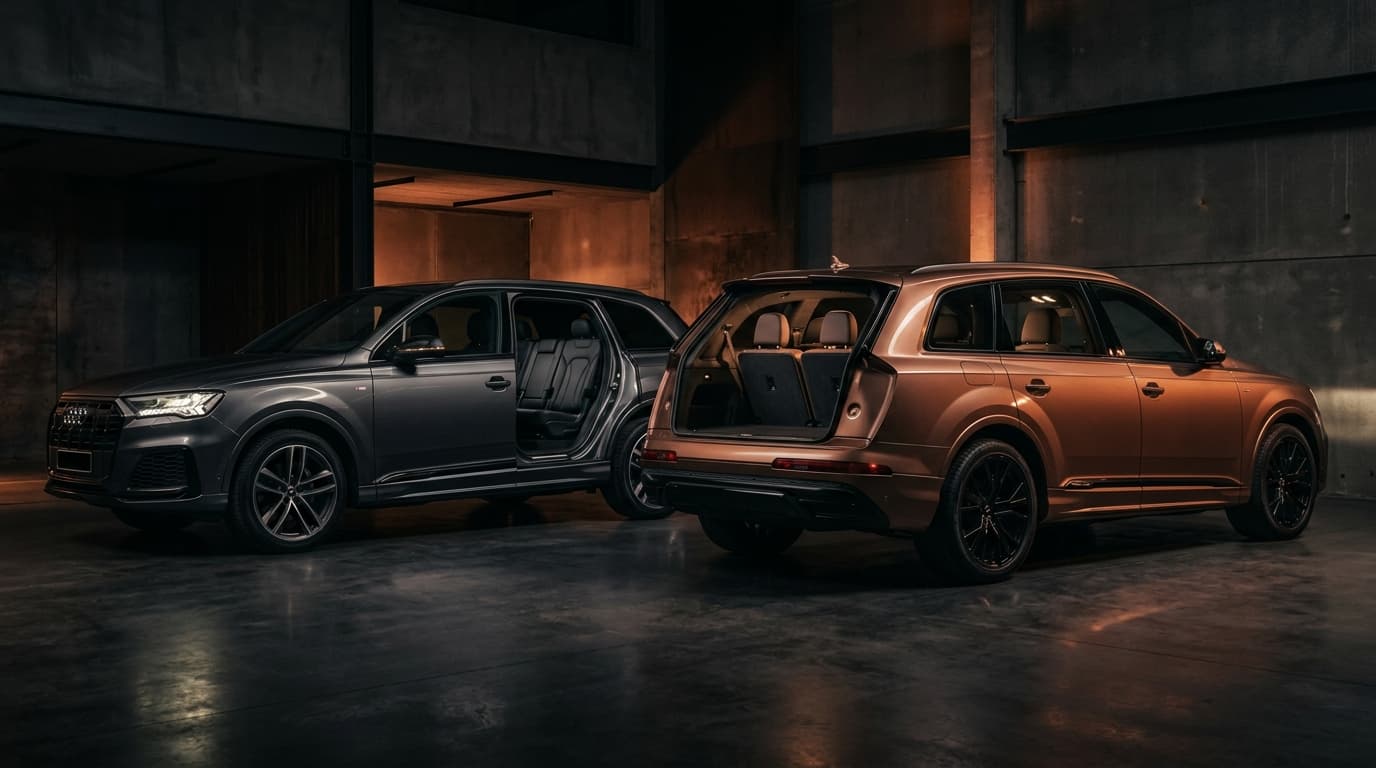
In Belgium, the Peugeot 5008 and the Skoda Kodiaq are the two most rational 7-seater SUVs for a large family. The 5008 offers seven seats as standard from €38,095 incl. VAT (TVAC); the Kodiaq keeps a more usable boot once all seven seats are up, with 340 litres against 259. The right choice depends on how you actually use the car.
Kodiaq or 5008: which is a true 7-seater?
Both are genuine 7-seaters, but the Peugeot 5008 delivers its seven seats as standard, whereas on the Skoda Kodiaq the third row is an option of about €1,000 and is unavailable on the plug-in hybrid version. For a family that often travels with seven, the 5008 is simpler to order.
The 5008 has another advantage for a large family: its second row is made of three individual seats of equal width that slide independently, where the Kodiaq keeps a two-thirds/one-third bench. In practice, that gives more flexibility to fit three child seats side by side, the number-one headache for families with three young children.
What we would avoid: aiming for a plug-in hybrid Kodiaq while expecting seven seats. The Kodiaq PHEV is limited to five seats. According to Skoda Belgium, the third row is reserved for the mild-hybrid petrol and diesel engines. On the 5008, seven seats are available across the whole range, including the fully electric E-5008.
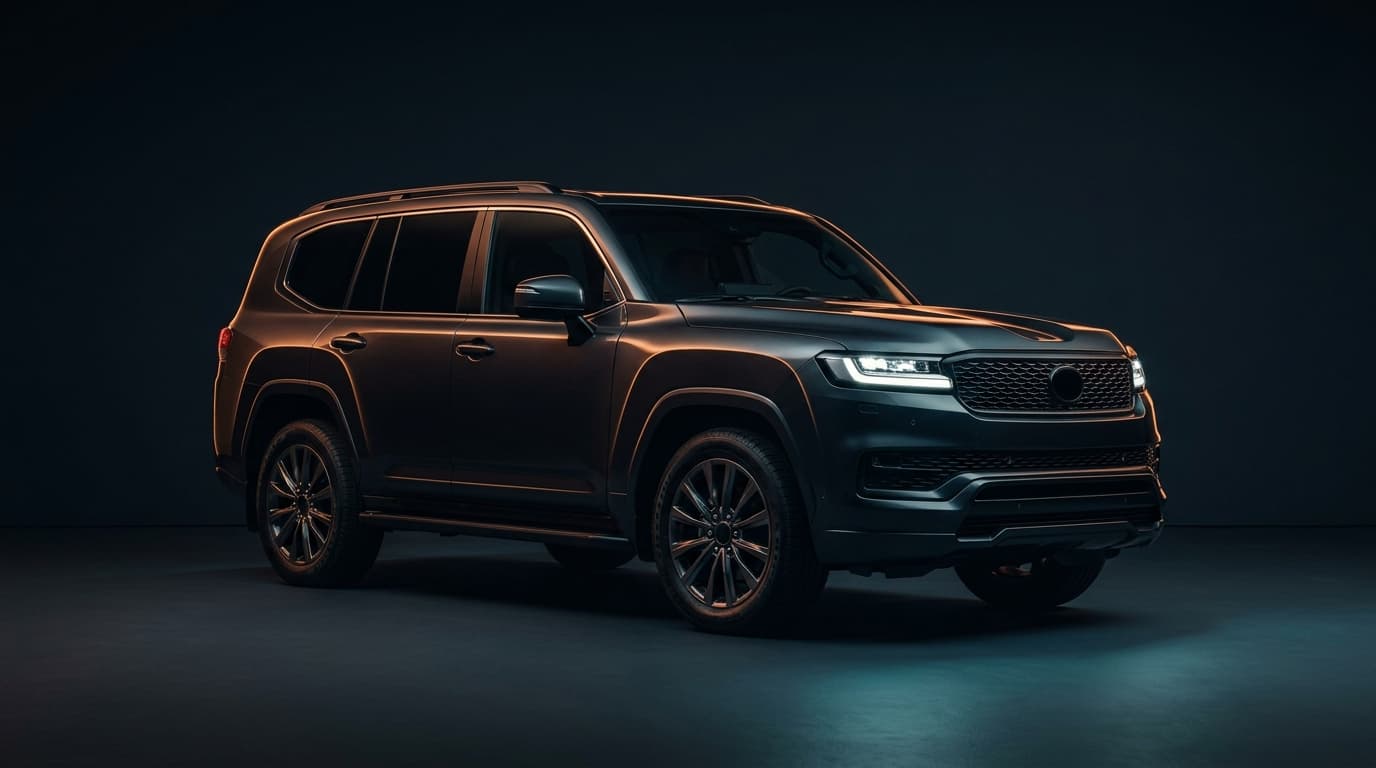
Which SUV has the bigger boot in 7-seat configuration?
The Skoda Kodiaq. In seven seats, its boot keeps 340 litres against 259 litres for the Peugeot 5008. For a large family heading off on holiday with seven on board, that 80-litre gap equals one extra large travel bag, the difference between loading calmly and playing Tetris in the boot.
The gap barely reverses in five seats, where the two SUVs are close: the Kodiaq climbs to 845 litres and up to 2,035 litres with all seats folded, the 5008 offers 748 litres behind the second row and 916 litres with the bench forward. On paper the volumes are similar; it is in seven-seat mode that the Kodiaq opens up a useful everyday lead.
The third row itself is more welcoming on the Skoda. According to measurements from the Parkers road test, the Kodiaq offers 90.5 cm of third-row headroom against 82 cm in the 5008. In concrete terms, a teenager of 1.70 m travels without bending their neck on a one-hour trip, whereas the 5008 keeps its row three mostly for children.
Which is cheaper in Belgium in 2026?
The Peugeot 5008 starts lower: from €38,095 incl. VAT (TVAC) in Allure Hybrid 145 e-DCS6, according to Peugeot Belgium. The Skoda Kodiaq sits higher, around €42,000 in mild-hybrid petrol, to which you must add the seven-seat option of about €1,000. On raw purchase price, the 5008 keeps the cost advantage for a large family.
| Model | Boot (7 seats) | Third row | BE price from | 7 seats standard |
|---|---|---|---|---|
| Peugeot 5008 | 259 L | 82 cm headroom | €38,095 | yes |
| Skoda Kodiaq | 340 L | 90.5 cm headroom | ~€42,000 | option (~€1,000) |
Promotions change the picture. Peugeot regularly advertises a conditional scrappage bonus on the 5008, and Skoda pushes stock deals on the Kodiaq Family that can exceed €9,000. The figure that matters: at equivalent trim and with bonuses applied, the real gap often narrows to around €2,000 to €3,000, to be checked at the dealer when buying.
On Belgian taxation, the two petrol versions are level. A Walloon large family benefits from a €250 cut on the registration tax (TMC, taxe de mise en circulation), and the annual road tax on a large petrol SUV stays moderate. For company drivers the maths differ: only 0 g CO₂ vehicles stay 100% deductible in 2026, which points to the electric E-5008. Our file on company-car SUV taxation breaks down deductibility version by version.
Which is more practical for a large family day to day?
The Peugeot 5008, especially with young children. Its three individual sliding second-row seats take three child seats side by side more easily, and each seat adjusts independently to settle a child's back or a booster. The Kodiaq answers with a bench that slides as one block, practical but less modular.
The Kodiaq takes the lead on long trips and holidays: a more generous boot with seven on board, a taller third row, and a host of in-house storage tricks (the famous "Simply Clever" ideas: an ice scraper in the fuel flap, an umbrella in the door). On the Belgian market, those details make the difference for a family that loads the car every weekend.
How many child seats fit side by side in the back?
Three child seats fit more easily across the Peugeot 5008, whose second row lines up three individual seats of equal width with Isofix on the outer positions. On the Skoda Kodiaq, the bench takes two child seats comfortably and a third depending on the size of the shells. For three children still in boosters, the 5008 remains the easiest to equip.
Kodiaq or 5008: which to choose for your profile?
For a family of three young children in child seats, on a set budget, the Peugeot 5008 is the logical choice: seven seats as standard, a modular second row and a lower entry price. Its electric E-5008 version adds the tax argument as a company car. The accepted downside: the 259-litre boot in seven seats and an i-Cockpit with a small steering wheel that some tall drivers dislike.
For a family that often travels with seven, with teenagers and luggage, the Skoda Kodiaq has the edge: 340 usable litres of boot, a more habitable third row and storage designed for daily life. You have to accept a higher entry price and the seven-seat option to tick. Before signing, the right reflex is still to sit in the third row with a child and load the boot like a holiday departure. To widen the comparison, see our best 7-seater SUVs in Belgium and, if budget comes first, our pick of family SUVs under €35,000.
Frequently asked questions
For a family that often travels with seven and luggage, the Skoda Kodiaq has the edge thanks to its 340-litre boot in 7-seat configuration (versus 259 in the 5008) and 90.5 cm of third-row headroom. For a tighter budget and seven seats as standard, the Peugeot 5008 starts lower, from €38,095 incl. VAT (TVAC), and remains a real 7-seater, including the electric version.
Yes. The Peugeot 5008 offers seven seats as standard across the range, including the electric E-5008. Its second row is made of three individual sliding seats and the third of two folding seats. The catch for a large family: with all seven seats up, the boot drops to 259 litres, just enough for a pushchair and a few bags.
No. On the new Skoda Kodiaq, the third row of two seats is a paid option (about €1,000), and it is not available on the plug-in hybrid version, which is limited to five seats. If you want a seven-seat Kodiaq, go for the mild-hybrid petrol or diesel engines.
The Skoda Kodiaq. In seven-seat mode it keeps 340 litres of boot space against 259 for the Peugeot 5008. In five seats the Kodiaq climbs to 845 litres and up to 2,035 litres with all seats folded; the 5008 offers 748 litres behind the second row and 916 litres with the bench slid forward.
The Peugeot 5008 starts at €38,095 incl. VAT (TVAC) in Allure Hybrid 145. The Skoda Kodiaq sits higher, around €42,000 in mild-hybrid petrol, to which you must add the seven-seat option (about €1,000). List prices vary by trim and current promotions; also factor in the Peugeot scrappage bonus and Skoda stock deals.
Three child seats fit more easily across the Peugeot 5008, whose second row is made of three individual seats of equal width. On the Skoda Kodiaq, the split bench takes two child seats comfortably and a third depending on the model. For three young children still in booster seats, the 5008 is easier to equip.
It depends on the powertrain. In 2026, the tax deductibility of CO₂-emitting company cars keeps tightening in Belgium; only 0 g CO₂ models stay 100% deductible. For a freelancer or an SME, it is the electric Peugeot E-5008 seven-seater that holds up on tax, while the petrol versions of both the Kodiaq and the 5008 lose ground.
We dig through the Belgian market data — TÜV reliability, real-world ADAC consumption, company-car taxation, list prices — to call it straight. No brand pays us.