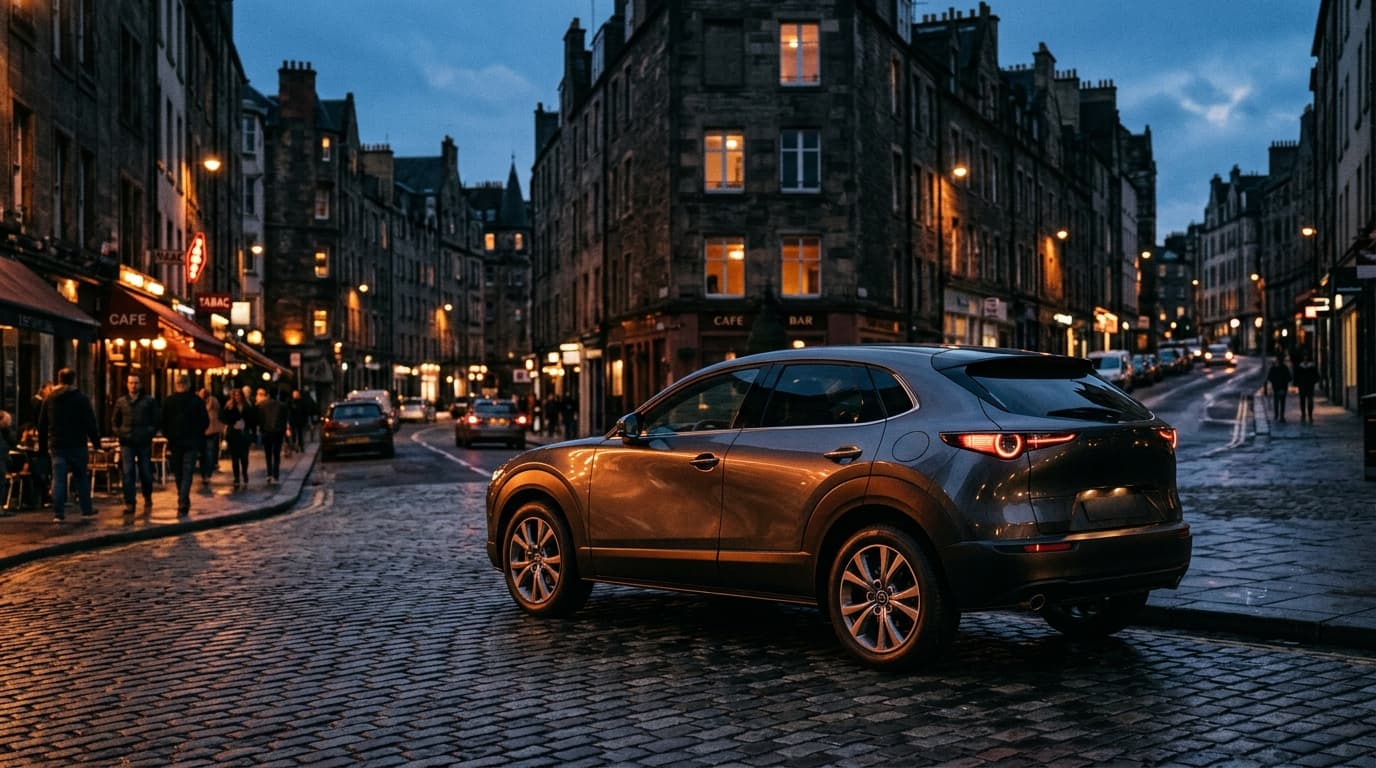
In Belgium, the best SUV for a young driver is not the cheapest, but the most insurable: a model under 70 kW (95 hp), like the Seat Arona 1.0 TSI 95, from €23,480 incl. VAT (TVAc) and a 5-star Euro NCAP rating. Above 95 hp, most insurers refuse or surcharge a beginner profile.
Which SUV to choose as a young driver in Belgium?
A compact SUV under 70 kW (95 hp), new or recent, rated at least 4 Euro NCAP stars. The Seat Arona 1.0 TSI 95 (from €23,480 incl. VAT) ticks all three boxes: insurable, safe, frugal. The deciding factor is not the purchase price, but the insurance premium the SUV triggers.
On the Belgian market, a young driver runs into the insurer first, not the seller. An Arona 1.0 TSI 95 hp develops 70 kW and 175 Nm: enough to go anywhere, low enough to stay under the threshold that tips premiums over. The number that counts: at €23,480 incl. VAT in Reference trim, it often works out cheaper over five years than a more powerful SUV bought €3,000 less but insured €800 more per year.
The Hyundai Bayon 1.0 T-GDi 100 hp (74 kW) plays the same tune for a slightly lower list price, with a five-year manufacturer warranty that reassures on a first car. The Toyota Yaris Cross hybrid 116 hp is the frugality card: it sits around 5 real litres, comes with Toyota Safety Sense as standard, but its 85 kW place it right at the limit of what an insurer accepts without flinching for a beginner.
Should you buy new or used for a first car?
A recent used car, three to five years old, stays the rational choice for a first car. The big depreciation has already happened, a 95 hp compact SUV insures exactly like a new one, and the registration tax has already dropped a lot with age. In practice, a well-maintained 2022 Arona or T-Cross costs €6,000 to €8,000 less than new for the same use. New only makes sense if you keep the car seven years or more, or if a discount exceeds 15 % of the list price. To dig into this market, see our compact SUV comparison in Belgium.
Why does power matter more than price to insure an SUV?
Because above 65 to 70 kW (88 to 95 hp), most Belgian insurers refuse a young driver or apply a deterrent surcharge. Power, not the vehicle's value, is the companies' first filter for a beginner profile.
In practice, a 95 hp SUV stays in the insurers' green zone; a 130 hp SUV tips the file into the red zone, where many companies simply will not cover a driver under 24 with no track record. That is why a 95 hp Arona insures while a more desirable 150 hp T-Roc becomes out of reach in the first year.
Power also weighs on regional tax. The Walloon registration tax factors in kilowatts, CO₂ and weight: on a 130 kW SUV, it can reach €2,478 at new registration, against a few hundred euros for a small 70 kW petrol SUV. The reflex to keep: check the power in kW on the certificate of conformity before falling for a trim level.
How much does insurance for an SUV cost a young driver?
Between €1,000 and €2,000 a year on average in Belgium, and up to €3,500 for a powerful vehicle or a high-risk profile. A young driver pays 2 to 3 times more than an experienced one for the same car.
This gap comes from the young-driver surcharge, which can reach +100 % in the first year and then falls with every claim-free year, until it rejoins the normal rate after four to five years. On a 95 hp compact SUV, full comprehensive cover often runs around €1,500 a year for a 20-year-old, against €600 to €700 for their parents. On a 130 hp SUV, when it is accepted at all, the same cover quickly tops €2,500.
Two levers cut the bill without cheating. First, choose partial rather than full comprehensive cover on a low-value used car, since the payout is capped at the vehicle's value anyway. Second, list a parent as the main driver and the young person as a secondary driver, provided the declared use is real. What we would avoid: declaring the young person as an occasional driver while they drive every day, because that false declaration can void the payout at the worst moment.
Which young-driver SUV offers the best safety-to-price ratio?
The Seat Arona 1.0 TSI 95, for its balance of price, insurable power and 5-star Euro NCAP rating. The table cross-references the Belgian list price, power, safety rating and each model's watch point, for first-car use.
| Model | BE price from | Power | Euro NCAP | Watch point |
|---|---|---|---|---|
| Seat Arona 1.0 TSI 95 | €23,480 | 95 hp / 70 kW | 5 stars | stripped-out entry trim |
| Hyundai Bayon 1.0 T-GDi 100 | €22,000 | 100 hp / 74 kW | 4 stars | average boot, 411 L |
| VW T-Cross 1.0 TSI 95 | €26,500 | 95 hp / 70 kW | 5 stars | priciest of the group |
| Toyota Yaris Cross hybrid | €28,000 | 116 hp / 85 kW | 5 stars | 85 kW, insurance limit |
| Dacia Duster Eco-G 120 | €19,690 | 122 hp / 90 kW | 3 stars | borderline safety and power |
Two logics stand out. For insurance peace of mind, the Arona, the Bayon and the T-Cross stay at or around 70 kW and earn 4 or 5 stars: these are the calmest first cars to underwrite. For pure purchase budget, the Dacia Duster smashes prices at €19,690 incl. VAT, but its 90 kW and 3-star Euro NCAP 2024 rating raise the premium and shrink the safety margin, the two items that matter most for a beginner. The Toyota Yaris Cross, for its part, wins on consumption and hybrid reliability, provided the insurance quote keeps up with its 85 kW. To compare hybrid drivelines, see our hybrid SUV in Belgium feature.
Which SUVs should a young driver avoid?
To avoid first: any SUV over 95 hp (70 kW). The surcharge, or outright refusal, erases the saving made at purchase. The power that looks great on the spec sheet is exactly the one that shuts the insurers' door.
Three families should be set aside for a first car. First the 150 hp-and-up hybrid versions, like the Dacia Duster Hybrid 155 (114 kW): appealing on paper, almost uninsurable at a bearable rate early in a driving career. Then premium used SUVs, whose upkeep and parts sink a small budget at the first breakdown. Finally, models rated below 4 Euro NCAP stars: on a first car driven by a statistically more exposed profile, safety equipment is not a luxury. If a used car still tempts you despite these reservations, run it through our method in the reliable used SUV comparison first, and always check the Car-Pass (the Belgian official mileage record) and the technical inspection before signing.
Frequently asked questions
What is the best SUV for a young driver in Belgium? The Seat Arona 1.0 TSI 95 hp. At 70 kW, it slips under the power ceiling that pushes up or refuses young-driver premiums, keeps a 5-star Euro NCAP rating and starts at €23,480 incl. VAT. The Hyundai Bayon 1.0 T-GDi 100 hp is the slightly cheaper alternative; the Toyota Yaris Cross hybrid, the most frugal choice if the insurance budget keeps up.
Can a young driver insure a powerful SUV in Belgium? Hardly. Above 65 to 70 kW (88 to 95 hp), most Belgian insurers refuse a young driver or apply a deterrent surcharge. A hybrid or turbo SUV of 130 hp and up is, in practice, almost impossible to insure as a first car at a reasonable price.
How much does insurance for an SUV cost a young driver? Budget on average €1,000 to €2,000 a year in Belgium, and up to €3,500 for a high-risk profile or a powerful vehicle. A young driver pays 2 to 3 times more than an experienced one, with a surcharge that can reach +100 % in the first year, then melts away with every claim-free year.
Should you buy your first SUV new or used? A recent used car (3 to 5 years) stays the rational choice: the depreciation has already happened and a 95 hp compact SUV insures just like a new one. New only makes sense if you keep the car for a long time or get a big discount; the registration tax (TMC), meanwhile, drops sharply with the vehicle's age.
Which young-driver SUV uses the least fuel? The Toyota Yaris Cross hybrid, around 5 real litres in mixed use, beats the turbo petrols (6 to 7 real litres). The Dacia Duster Eco-G, on LPG bi-fuel, sharply lowers the cost per kilometre but stays a petrol with classic consumption in unleaded mode.
Which SUV should a young driver avoid? Any SUV over 95 hp (70 kW): the surcharge, or outright refusal, wipes out the purchase saving. Avoid too the 150 hp-and-up hybrid versions (Duster Hybrid 155, 114 kW), premium used SUVs with costly upkeep, and models rated below 4 Euro NCAP stars for a first car.
Can parents lower a young driver's premium? Yes. Listing a parent as the main driver and the young person as a secondary driver lowers the premium, as long as it is honest: declaring the young person as occasional while they drive every day is a false declaration that can void cover in the event of a claim.
Frequently asked questions
The Seat Arona 1.0 TSI 95 hp. At 70 kW, it slips under the power ceiling that pushes up or refuses young-driver premiums, keeps a 5-star Euro NCAP rating and starts at €23,480 incl. VAT. The Hyundai Bayon 1.0 T-GDi 100 hp is the slightly cheaper alternative; the Toyota Yaris Cross hybrid, the most frugal choice if the insurance budget keeps up.
Hardly. Above 65 to 70 kW (88 to 95 hp), most Belgian insurers refuse a young driver or apply a deterrent surcharge. A hybrid or turbo SUV of 130 hp and up is, in practice, almost impossible to insure as a first car at a reasonable price.
Budget on average €1,000 to €2,000 a year in Belgium, and up to €3,500 for a high-risk profile or a powerful vehicle. A young driver pays 2 to 3 times more than an experienced one, with a surcharge that can reach +100 % in the first year, then melts away with every claim-free year.
A recent used car (3 to 5 years) stays the rational choice: the depreciation has already happened and a 95 hp compact SUV insures just like a new one. New only makes sense if you keep the car for a long time or get a big discount; the registration tax (TMC), meanwhile, drops sharply with the vehicle's age.
The Toyota Yaris Cross hybrid, around 5 real litres in mixed use, beats the turbo petrols (6 to 7 real litres). The Dacia Duster Eco-G, on LPG bi-fuel, sharply lowers the cost per kilometre but stays a petrol with classic consumption in unleaded mode.
Any SUV over 95 hp (70 kW): the surcharge, or outright refusal, wipes out the purchase saving. Avoid too the 150 hp-and-up hybrid versions (Duster Hybrid 155, 114 kW), premium used SUVs with costly upkeep, and models rated below 4 Euro NCAP stars for a first car.
Yes. Listing a parent as the main driver and the young person as a secondary driver lowers the premium, as long as it is honest: declaring the young person as occasional while they drive every day is a false declaration that can void cover in the event of a claim.
We dig through the Belgian market data — TÜV reliability, real-world ADAC consumption, company-car taxation, list prices — to call it straight. No brand pays us.