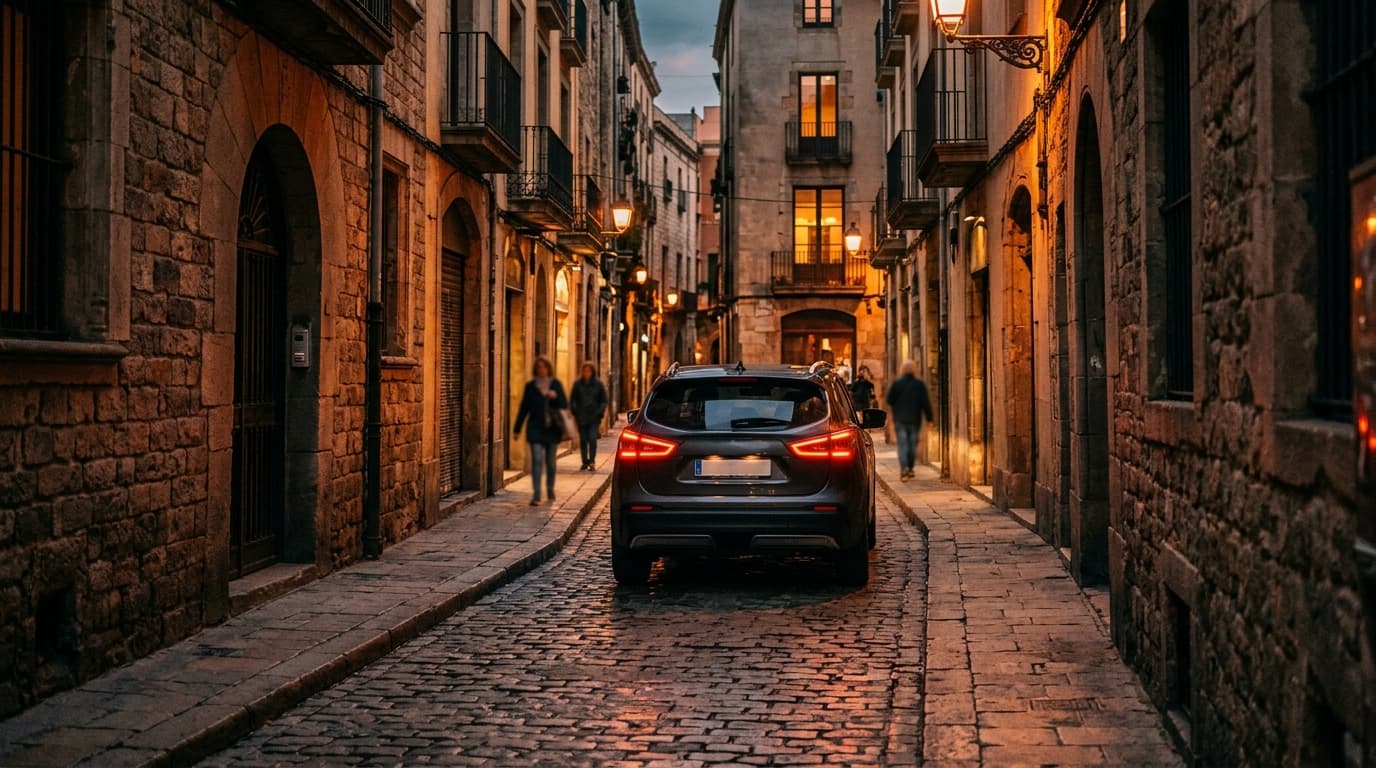
Since 1 July 2026, the Brussels Low Emission Zone (LEZ) has tightened, and the choice of a city SUV is no longer about styling but about powertrain and footprint. The Toyota Yaris Cross Hybrid, the shortest at 4.18 m, starts at €30,535 in Belgium. Here is which one truly fits urban use.
Which city SUV to choose in town in 2026?
For a city driver squeezing into tight spots and driving mostly in the centre, the Toyota Yaris Cross Hybrid is the most rational choice. At 4.18 m, it is the shortest in this comparison, and its hybrid drops to 5-6 L/100 km in real urban use thanks to electric running at low speed. It starts at €30,535 in Dynamic trim, according to the Moniteur Automobile.
The Renault Captur E-Tech full hybrid 160 hp is the most direct alternative. It measures 4.24 m, quotes 4.4 to 4.7 L/100 km in WLTP and starts at €30,000 in Techno trim. Its strength: a sliding boot that goes from 326 to 422 litres depending on the bench position, more modular than the class average.
What we would avoid for pure urban use: the VW T-Cross, still petrol-only with no hybrid version, and the Dacia Duster. The latter stays unbeatable on price, but its 4.34 m and 6.5 to 7.5 L/100 km real fuel use make it more of a countryside companion than a city car. To thread between two vans on Rue Antoine Dansaert, every centimetre counts.
Why does the LEZ change the game in 2026?
Because the Belgian rulebook tightened this month. Since 1 July 2026, the Brussels LEZ bans Euro 5 diesel cars and Euro 2 petrols, with fines officially coming into force on that date. Antwerp and Ghent already run their own Low Emission Zones, and the Flemish government will review a tightening in 2027, according to the Moniteur Automobile.
In practice, for a new purchase, no recent city SUV is affected: they all meet the Euro 6d standard and stay allowed everywhere. The real trap hides in the used market. A pre-2015 diesel or an old petrol is already excluded from Brussels, and that perimeter will only widen. On the Belgian market, buying an old combustion car to drive in town means risking being locked out in two or three years.
That is where the hybrid makes full sense. A new Toyota Yaris Cross or Renault Captur E-Tech keeps you clear of the next tightening while cutting your real emissions. The figure that counts: in Brussels, a LEZ fine reaches €350 per offence, enough to fund several tanks of a frugal hybrid.
Which city SUV uses the least fuel in town?
The hybrid pulls ahead as soon as you drive in town. The Toyota Yaris Cross Hybrid drops to 5-6 L/100 km in the real world in urban use, where its combustion engine often shuts off in favour of electric power at low speed. The Renault Captur E-Tech quotes 4.4 to 4.7 L/100 km in WLTP, one of the best figures in the class, even if the real-world number sits closer to 5.5 L in mixed conditions.
The petrol powertrains, for their part, pay for their lack of electric assistance in town. The mild-hybrid Ford Puma quotes 5.6 to 5.8 L/100 km WLTP, an honest figure but easily beaten in practice as soon as stops multiply. The Dacia Duster TCe 130 climbs to 6.5-7.5 L/100 km in the real world: logical for a heavier, taller vehicle, less suited to stop-and-go.
| Model | Length | Powertrain | Real city fuel use | Belgian price from |
|---|---|---|---|---|
| Toyota Yaris Cross | 4.18 m | Full hybrid | 5-6 L/100 | €30,535 |
| Renault Captur | 4.24 m | Full hybrid | ~5.5 L/100 | €30,000 |
| Ford Puma | 4.21 m | Mild hybrid | ~6 L/100 | from ~€28,000 |
| Dacia Duster | 4.34 m | Petrol TCe | 6.5-7.5 L/100 | from ~€22,000 |
The maths is quick for a city driver covering 12,000 km a year, half of it in town. Between a hybrid at 5.5 L and a petrol at 7 L, the 1.5 L gap amounts to about 180 litres of fuel a year, or nearly €300 at current pump prices. Over five years, the hybrid pays back a good part of its premium.
Which urban SUV is the easiest to park?
Length stays the tie-breaker in a tight Brussels space. The Toyota Yaris Cross, at 4.18 m, is the shortest of the group and the most at ease in a narrow car park. The Ford Puma follows at 4.21 m, then the Renault Captur and VW T-Cross, level at 4.24 m. The Dacia Duster brings up the rear at 4.34 m, 16 cm longer than the Toyota: you feel it the moment you reverse into a one-way street.
Beyond length, the turning circle and visibility count just as much. City SUVs offer a raised driving position that helps judge angles, a real asset in dense traffic. The Yaris Cross and Captur both offer a reversing camera and sensors as standard or as an affordable option, which we strongly recommend for daily city use.
One last, often forgotten point: height. Some Brussels car parks cap at 1.90 m, or even 1.80 m. None of these city SUVs exceeds 1.60 m, so no nasty surprise at the barrier. What we would avoid, on the other hand, are SUVs from the class above, longer and wider, which turn every parking manoeuvre into a trial.
Hybrid, petrol or electric for the city?
For a city driver without a home charger, the full hybrid (HEV) is the best compromise. It recovers braking energy and runs on electric power at low speed, without ever needing to plug in: ideal for short, choppy trips. That is why the Yaris Cross and Captur E-Tech dominate the class on real urban fuel use.
Electric makes sense if you have a charger and mostly do short trips. The Ford Puma Gen-E, the fully electric version, offers a 533-litre Gigabox boot and 13.1 kWh/100 km, but its €38,100 price in Premium trim places it above the hybrids, according to the Moniteur Automobile technical data. For pure city driving, a small electric stays unbeatable on running costs, provided you charge at home.
Pure petrol, finally, only makes sense on a very tight budget. A Dacia Duster TCe stays the cheapest to buy, from around €22,000, but its urban fuel use and size steer it more towards suburban or rural use. What we would avoid: the PHEV city SUV, whose rechargeable battery is useless if you have no charger, for a premium of several thousand euros.
Which city SUV for your profile?
For a city driver squeezing into tight spots and driving mostly in town, the Toyota Yaris Cross Hybrid is the rational choice: the shortest at 4.18 m, 5 to 6 L/100 km in the real world, and hybrid reliability that has proven itself. Its accepted catch: a 397-litre boot that is a touch tight, and a plain, no-frills cabin.
For someone who wants more space and a more upmarket look, the Renault Captur E-Tech regains the edge: modular sliding boot, careful finish and class-leading WLTP fuel use, for a near-identical starting price. If budget comes first and you also drive out of town, the Dacia Duster stays unbeatable, provided you accept its size and petrol fuel use. Before signing, the smart move is to test-drive on your real routes, parking manoeuvres included, not just a lap around the block. To widen the picture, see our guide to the best compact SUV in Belgium and, if you are torn on hybrid, our hybrid or electric SUV feature.
Frequently asked questions
For mostly urban use, the Toyota Yaris Cross Hybrid is the most rational pick: just 4.18 m (the shortest in the class), 5 to 6 L/100 km in the real world in town thanks to electric running, and proven hybrid reliability. It starts at €30,535 in Belgium. The Renault Captur E-Tech full hybrid is the direct alternative, barely longer (4.24 m) and listed from €30,000. Both are future-proof against the tightening of the LEZ (Low Emission Zones).
Since 1 July 2026, the Brussels Low Emission Zone bans Euro 5 diesels and Euro 2 petrol cars. All recent hybrid or petrol city SUVs (Euro 6d) stay allowed without any issue. The real risk concerns used cars: a pre-2015 diesel or a pre-2000 petrol is already excluded. For a new purchase, a hybrid like the Yaris Cross or the Captur keeps you clear of the next tightening.
The hybrid wins clearly in urban use. The Toyota Yaris Cross Hybrid drops to 5-6 L/100 km in the real world in town, where it often runs in electric mode at low speed. The Renault Captur E-Tech quotes 4.4 to 4.7 L/100 km WLTP. By contrast, a petrol Dacia Duster TCe 130 runs closer to 6.5-7.5 L/100 km, and the mild-hybrid Ford Puma around 5.6-5.8 L WLTP, so more in practice.
Length makes the difference in a tight space. The Toyota Yaris Cross is the most compact at 4.18 m, followed by the Renault Captur and VW T-Cross at 4.24 m. The Ford Puma sits at 4.21 m. The Dacia Duster, at 4.34 m, is clearly bulkier: 16 cm longer than the Yaris Cross, which you feel in a Brussels car park. Under 4.25 m, you stay genuinely nimble.
For urban use without a home charger, the full hybrid (HEV) is the best compromise: it recovers braking energy and runs on electric power at low speed, without ever needing to plug in. Electric is ideal if you have a charger and mostly do short trips, but the offer stays expensive in the compact class (Ford Puma Gen-E at €38,100). Pure petrol only makes sense on a very tight budget.
The two are close. The Yaris Cross bets on compactness (4.18 m) and Toyota hybrid reliability, with a warranty that can stretch to 10 years through the dealer network. The Captur offers a more modular sliding boot, a more upmarket cabin and slightly better WLTP fuel use. To thread and park, take the Toyota; for space and presentation, the Renault. The starting-price gap is tiny, around €500.
Yes, budget €3,000 to €5,000 more than an equivalent hatchback for the raised driving position and the SUV look. A Toyota Yaris Cross Hybrid at €30,535 costs about €4,000 more than a Yaris Hybrid hatchback. The upside: better visibility in town, easier access and often stronger resale value, as the SUV segment stays in high demand on the Belgian market.
We dig through the Belgian market data — TÜV reliability, real-world ADAC consumption, company-car taxation, list prices — to call it straight. No brand pays us.