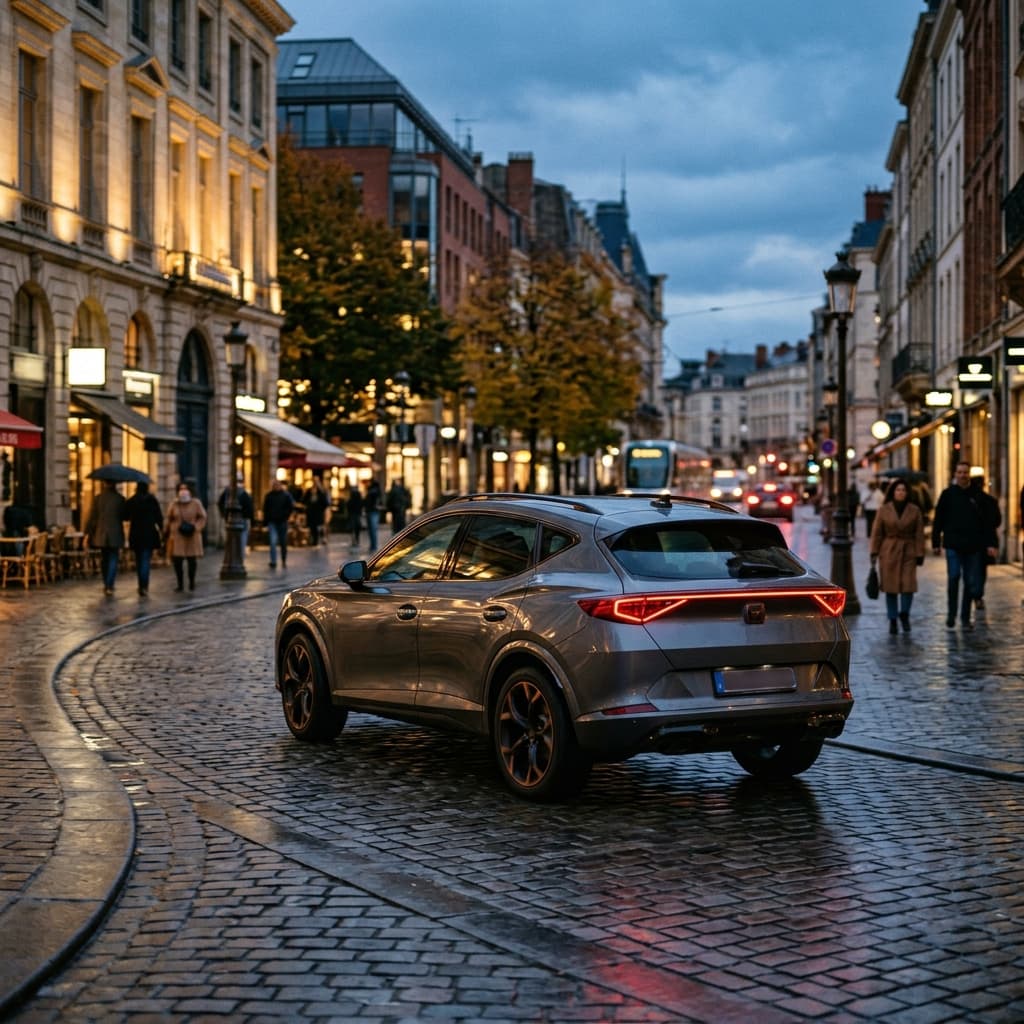
On the Belgian market, a new premium compact SUV sells for between €40,000 and €47,000 in 2026. The BMW X1 starts at €40,300, the Audi Q3 climbs to €47,330. Between the two sit the Volvo XC40 and the Mercedes GLA. Here's which one truly fits your budget and your use, badge aside.
Which premium compact SUV to choose in Belgium in 2026?
For a professional or a young buyer who wants the premium badge without blowing the budget, the BMW X1 is the most rational choice. It starts at €40,300 in sDrive18i trim, offers the largest boot of the four and a more consistent drive than the class average, according to Moniteur Automobile pricing. It's the best value-for-money in the segment.
The Volvo XC40 is the direct alternative, listed from €40,350 in B3 mild-hybrid petrol. Its strength: the most generous standard equipment and a built-in Google multimedia system, smoother in use than its German rivals. On the Belgian market, it appeals to those who prefer comfort and Scandinavian restraint over a sporty pitch.
What we'd avoid as a reflex: defaulting to the Audi Q3, the most desirable on paper but also the priciest at entry, at €47,330. It remains an excellent choice, but its access ticket jumped with the new generation. The Mercedes GLA, meanwhile, sits around €42,000 and plays mainly the badge and hushed-comfort card.
How much does a premium compact SUV really cost in Belgium?
The premium compact class plays out in a tight entry band that soon soars. The BMW X1 sDrive18i starts at €40,300 and the Volvo XC40 B3 at €40,350, all but neck and neck. The Mercedes GLA settles around €42,000, while the Audi Q3 35 TFSI starts at €47,330 in Pro Line trim, according to Belgian pricing from Moniteur Automobile.
The figure that matters: the Audi Q3 starts about €7,000 above the entry BMW X1. That gap reflects a richer base trim at Audi, but it weighs heavily for a cash buyer. At comparable spec, the X1 and the XC40 remain the two most affordable entry points in the segment in Belgium.
| Model | BE price from | Entry engine | WLTP combined | Reliability (index) |
|---|---|---|---|---|
| BMW X1 | €40,300 | Petrol sDrive18i | 6.4 L/100 | 6.8/10 |
| Volvo XC40 | €40,350 | Mild-hybrid B3 petrol | ~7 L/100 | good |
| Mercedes GLA | ~€42,000 | Petrol GLA 200 | ~6.7 L/100 | good |
| Audi Q3 | €47,330 | Petrol 35 TFSI | ~6.7 L/100 | 7/10 |
Watch the catalogue effect: high trims and powerful engines quickly cross the €55,000 line. An RS Q3 climbs to €73,227 in Belgium. What we'd avoid: paying for the premium then ending up on a stripped version, or conversely buying a sporty engine whose potential you never use on Belgian roads capped at 120 km/h.
Which premium compact is the most reliable and holds its value?
Reliability quietly separates this quartet. The Audi Q3 40 TFSI takes the segment's best score at 7/10, ahead of the BMW X1 xDrive20i at 6.8/10, according to indices compiled by Carverif. Two safe bets, with a slight edge to the Audi. The Volvo XC40 shares its proven mechanicals with Polestar, and the Mercedes GLA relies on a dense dealer network in Belgium.
Resale value cuts more clearly. Used-market data shows the Audi Q3 keeps the best rating, driven by strong demand in Belgium and Germany. The BMW X1 follows closely. The Volvo XC40 and Mercedes GLA depreciate a little faster, the Volvo still hampered by a less established premium image than the Germans.
The figure that matters: over three years, a sought-after German badge limits the loss to 40-45% of the new price, versus 50% or more for a less desirable model. What we'd avoid on the used market: the very first model years of a new generation, more exposed to teething faults. A one- or two-year-old second-hand Q3 or X1 is often the best maths.
Premium compact SUV: which powertrain for company use?
This is the point that changes everything in Belgium, where a large share of these SUVs runs as a company car. The 2026 tax rules tighten the deductibility of emitting powertrains: it drops year after year for combustion and simple hybrids, and only 0 g CO₂ vehicles stay 100% deductible. A petrol premium SUV therefore becomes a costly choice on the company side.
The benefit-in-kind (ATN — avantage de toute nature) confirms it. A petrol BMW X1 sDrive18i generates a monthly ATN of €335.69 taxed on the driver, an amount that adds up over several years. Combined with the falling deductibility for the company, pure petrol becomes hard to defend as a company car in 2026, despite its gentler purchase price.
Audi has the counter. The new plug-in Q3 e-hybrid claims 272 combined hp and 114 km of electric range, up from barely 50 km on the previous generation, with charging up to 50 kW on DC. It's the only one of the four to genuinely tick the company-tax box without going full electric. The condition, on the Belgian market: actually charge it, otherwise an unplugged PHEV consumes as much as a combustion car. To dig deeper, see our feature on company-car SUV taxation in Belgium.
Which one to avoid, and why?
None of these four SUVs is a bad choice, but each has a trap. The Mercedes GLA is the hardest to recommend on a tight budget: it mostly charges for a badge, with a cabin a notch below the Q3 on perceived quality and faster depreciation. What we'd avoid: choosing it for the star, then cutting the options that make the premium in the first place.
The Volvo XC40 in mild-hybrid petrol consumes more than the Germans, around 7 L/100 km in the real world, and its sporty positioning is less convincing. Avoid it if you're after driving pleasure; favour it if comfort and equipment come first. The Audi Q3, for its part, comes dear at entry: at €47,330, it only makes sense if you value the finish or the e-hybrid version.
The BMW X1, finally, is the most versatile, but its flaw is fiscal: in petrol, it takes the full brunt of the 2026 company tightening. What we'd absolutely avoid: buying a pure-petrol premium compact as a company car for image, when a private cash buyer will amortise that same model far better. The right reflex is to match the powertrain to the financing method.
Which premium compact SUV for your profile?
For a private buyer paying cash who wants the best value-for-money, the BMW X1 sDrive18i at €40,300 remains the benchmark: generous boot, solid drive, controlled depreciation. Its assumed downside is a high benefit-in-kind that hurts it as a company car, but that point doesn't concern the private buyer.
For someone who prioritises comfort and standard equipment, the Volvo XC40 at €40,350 takes the lead, with its Google multimedia and Scandinavian restraint. For finish, resale value and a genuine company option, the Audi Q3 justifies its €47,330 — especially in plug-in e-hybrid form if the trips and the wallbox follow. The Mercedes GLA, finally, only holds up if the three-pointed star matters more than the rest. Before signing, the right reflex is a test drive on your real routes and an honest calculation between private and company purchase. To go further, see our guide to the best reliable used SUV in Belgium.
Frequently asked questions
For a rational purchase, the BMW X1 is the best compromise: it starts at €40,300 in Belgium, offers the largest boot of the four and a solid road manner. The Volvo XC40 (from €40,350) is the most comfortable and best-equipped as standard, with its built-in Google infotainment. The Audi Q3, pricier at €47,330, stands out for its interior finish and stronger resale value. The Mercedes GLA leans on the badge and comfort, from around €42,000.
Expect an entry price between €40,000 and €47,000 in 2026. The BMW X1 sDrive18i starts at €40,300, the Volvo XC40 B3 at €40,350, the Mercedes GLA around €42,000 and the Audi Q3 35 TFSI at €47,330 (source: Moniteur Automobile). High trims and powerful engines quickly push the bill beyond €55,000, with no real everyday benefit.
The Audi Q3 40 TFSI earns the segment's best score at 7/10 on reliability indices, ahead of the BMW X1 xDrive20i at 6.8/10 (Carverif). Both remain safe bets. The Volvo XC40 uses proven mechanicals shared with Polestar, and the Mercedes GLA a strong Belgian dealer network. On the used market, avoid the first production years of a new generation, which are more prone to teething issues.
The Audi Q3 keeps the best resale value, driven by strong demand on the Belgian and German used markets. The BMW X1 follows closely. The Mercedes GLA and Volvo XC40 depreciate a little faster, with the Volvo hampered by a less established premium image. The figure that matters: over three years, a sought-after German badge limits the loss to 40-45% of the new price, versus 50% or more for a less desirable model.
As a company car, Belgian 2026 tax rules penalise combustion and simple hybrids: their deductibility keeps dropping and only 0 g CO₂ vehicles stay 100% deductible. A petrol premium SUV also weighs heavily on benefit-in-kind — €335.69 per month for a BMW X1 sDrive18i. The only option that ticks the tax box without going full electric is the plug-in Audi Q3 e-hybrid (114 km of electric range), provided you actually charge it.
The BMW X1 is more rational: cheaper to buy (€40,300 versus €47,330), bigger boot and a more dynamic drive. The Audi Q3 justifies its premium with a superior interior finish, better resale value and a genuinely relevant e-hybrid version for company use. For a cash purchase on a budget, take the X1; for finish and resale, the Q3. The entry-price gap still reaches €7,000.
A premium compact costs €8,000 to €12,000 more than an equivalent mainstream SUV (think Volkswagen T-Roc or Peugeot 3008). In return: finish, badge, on-board tech and above all a stronger resale value that offsets part of the gap. What we'd avoid: paying for the premium badge, then picking the stripped base trim that loses the equipment argument against a well-specced mainstream rival.
We dig through the Belgian market data — TÜV reliability, real-world ADAC consumption, company-car taxation, list prices — to call it straight. No brand pays us.